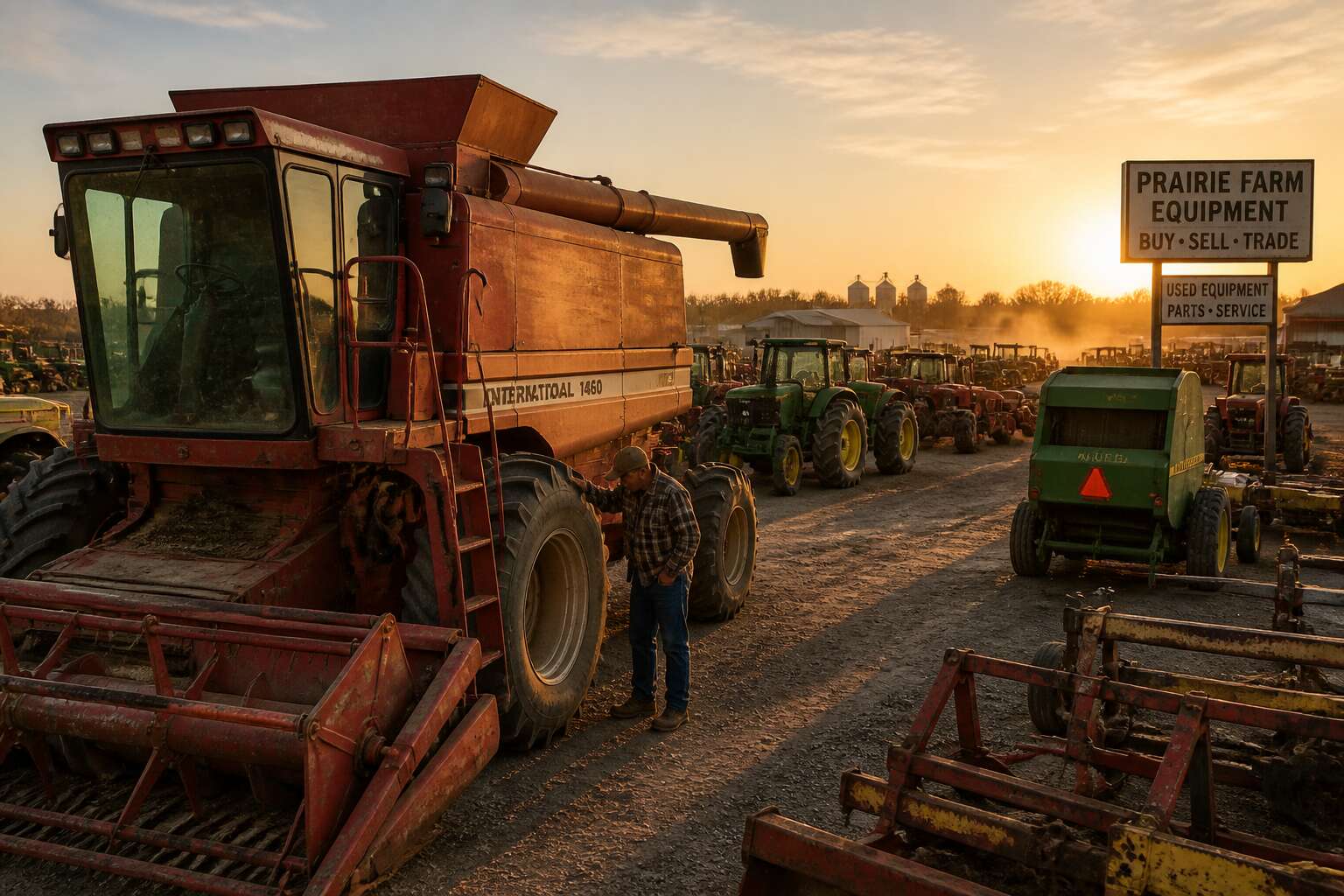
Evaluating the Condition of Pre-Owned Agricultural Machinery
Visual Inspection Checklist
Evaluating the Condition of Pre-Owned Agricultural Machinery: Visual Inspection Checklist
Scrutinise every weld seam and bolted joint before you commit to a purchase on any used farm equipment marketplace. Surface rust alone is manageable, but deep pitting in load-bearing arms ends the conversation quickly. Bring a torch and a mirror to probe hidden cavities where corrosion lingers.
- Check hydraulic hoses for cracking and perished seals at every connection point
- Inspect tyres for uneven wear, sidewall cuts and dry rot
- Examine the chassis for evidence of previous accident repairs
- Look for fresh oil residue around engine gaskets and transmission housings
Work methodically from front to rear. A machine that appears tidy from a distance can disguise a fractured axle housing or a bent drawbar. Trust your own eyes, not the seller’s assurances.
Engine Hours and Usage Indicators
Engine hours are a standard measure of a machine’s history, yet that digital counter demands interpretation. A used farm equipment marketplace listing may boast a low hour readout, but those digits only matter alongside usage context. A tractor idling through hot afternoons to power a cooler accumulates hours without meaningful work. Another doing heavy tillage logs the same count with far more wear. The raw number is just the opening detail.
Buyers should cross-reference the hour meter against idle time recorded in the computer. They should examine service intervals in the maintenance log. Fuel consumption records reveal whether the machine worked under load consistently. These usage indicators speak to how the previous owner treated the equipment. For the attentive buyer, they matter more than the initial asking price. The used farm equipment marketplace rewards that attention to detail.
Reviewing Service History and Logs
In the used farm equipment marketplace, the service log is the machine’s biography, and the plot is often more compelling than the odometer’s confession. A pristine hour count can conceal a history of neglected hydraulic filters or long intervals between engine oil changes. For a combine harvester working the Western Cape’s wheat belt, a missed service could mean hidden wear in the gearbox that will surface after your first harvest. The records show if the previous owner adhered to the manufacturer’s schedule or only reacted to failures.
A thorough review of the logs should cover several key entries:
– Coolant changes and the condition of the hoses at the time of service.
– The type of lubricant used, specifically if it matches the viscosity for your local climate.
– Records of electrical faults, which often indicate wiring harness issues rather than simple battery swaps.
– The frequency of filter replacements for the fuel and air intake systems.
The used farm equipment marketplace rewards buyers who treat documentation as a primary source, not a formality. A log filled with genuine entries, signed off with dates and odometer readings, suggests an owner who valued uptime through prevention. This diligence is your safeguard against buying a hidden liability, ensuring your capital works as hard as the machine does.
Identifying Common Wear and Tear
Evaluating the Condition of Pre-Owned Agricultural Machinery: Identifying Common Wear and Tear
South African growers know the sting of an auction machine that failed in peak season. I have witnessed more than one auction win become a repair bill. The used farm equipment marketplace rewards buyers who read the evidence in moving parts, not merely the paint. A start-up cycle reveals a machine’s true condition. Listen for hydraulic whine, which points to contaminated fluid or a tired pump. Trace each hose. Rust inside the hydraulic reservoir is evidence no inspection sheet will record.
- Pins and bushings in linkage arms let the implement sag visibly
- Irregular tread patterns pinpoint misaligned axles
- Bearings run hot after a long load cycle
Gear teeth collapse when machinery has worked dusty Free State wheat fields without proper filtration. Every grain of dust contributed. Metallic flecks in the oil filter reveal internal erosion. It is a common sight in the used farm equipment marketplace.
Testing Hydraulic Systems and Attachments
The used farm equipment marketplace often hides trouble in the attachments. When you test a hydraulic system, begin with the cold start. A healthy pump should respond without hesitation. I always cycle the loader through a full range of motion, watching for droop or drift. The bucket should hold its position for at least a minute. A slow bleed tells you the cylinder seals are failing. Check the couplers for leaks under pressure.
For attachments, the wear points tell the story. Look at the cutting edges and tines. Worn attachment points can mean extra costs later.
- Run the engine at operating RPM and extend each hydraulic function fully.
- Listen for a steady hum, not a whine.
- Switch to auxiliary ports and hold pressure for thirty seconds.
A drop in pressure means internal leakage. The only reliable way to evaluate is to run it. Put the machine under load. Test the auxiliary hydraulics with a known attachment. Monitor the pressure gauge if available. A sudden drop indicates a failing valve or pump.
Navigating Online Auctions and Classifieds
Choosing Reliable Auction Platforms
The auctioneer’s gavel now echoes through fibre lines and empty auction halls. Across South Africa, the used farm equipment marketplace operates in digital spaces where provenance replaces proximity. I have seen a farmer in the Northern Cape bid on a planter stored in KwaZulu-Natal, relying on verified photographs and signed condition reports rather than a personal visit.
Selecting a dependable platform demands more than studying a homepage. The most credible operations expose their verification methods, publish seller histories, and facilitate third party machinery inspections before payment.
Things to examine before creating an account:
– Whether the platform maintains a physical presence in South Africa
– How long the operation has been trading agricultural assets
– What protections apply if a listed implement never arrives
This diligence matters. The used farm equipment marketplace rewards patience, but it punishes recklessness in equal measure.
Setting a Budget and Bidding Strategies
The gavel’s echo now lives in your data bundle. Online auctions demand a different breed of patience than the old ring at Bredasdorp. You watch the ticker rise while sitting in your bakkie, and the temptation to chase a losing bid becomes a personal matter. Respect the clamour of the moment, but trust your arithmetic more.
Set your ceiling before the lot opens. Decide what the implement is worth to your operation, not to the crowd.
1. Establish a maximum figure based on your service records and expected maintenance costs.
2. Add a ten percent buffer for auction fees and transport.
3. Commit to that number in writing before you log in.
The used farm equipment marketplace rewards the disciplined. When the bidding slows near your limit, remember that another planter will always appear on the next catalogue. Winning is satisfying. Winning at the wrong price is a memory that lingers on your balance sheet.
Watch the early birds and the late snipers. Some fellow bidders reveal their intentions quickly, others sit quietly until the final seconds. Learn their rhythms. Attend a few auctions without a paddle to study the local customs, like a memsahib observing a new social circle. The bidding floor has its own etiquette, and the regulars know each other’s habits.
Keep your own strategies uncluttered. The used farm equipment marketplace offers plenty of chances to overthink, but the clearest heads secure the best bargains. Bid with conviction, pause with purpose, and walk away when the numbers stop making sense. Your bank manager will appreciate the restraint, even if your pride feels the sting.
Verifying Seller Credentials
I have been defrauded by a seller who disappeared after the deposit. Now I verify before I commit! In the used farm equipment marketplace, a legitimate seller can prove who they are. Get the physical address, not a post office box. Call the local co-op and ask if the name matches a working farm.
Check the photographs against other listings. A single image reused across multiple adverts signals a broker. Ask for a live video call showing the machine as it sits today. A real owner will do this. A dishonest seller will make excuses.
- Request the original invoice or registration.
- Ask for the previous owner’s contact if the seller is a dealer.
- Run the serial number through the SAPS stolen goods register.
None of this guarantees a transaction. But each step raises the cost of deception. The used farm equipment marketplace rewards caution. Verify the person behind the listing.
Shipping and Logistics for Large Equipment
Winning a bid on the used farm equipment marketplace produces relief, then an immediate problem: moving a five tonne machine across the country. Online auctions and classifieds end with a click, but the machinery still sits on a farm in Mpumalanga. I once nearly lost a tractor to a haulier who quoted from a photograph without checking axle width. The real cost hides in the shipping and logistics chain, not the hammer price.
Break the transport into three risks:
- Insurance for the cargo, not the truck.
- Loading and lashing the equipment onto a lowbed with rated chains.
- Border clearance documents when the machine crosses a provincial or national line.
A seller on the used farm equipment marketplace who refuses a bill of lading should raise suspicion. The auctioneer’s standard terms rarely cover damage in transit, and the seller’s cover stops at the farm gate. That gap causes disputes. I request a pre-voyage photo set and a signed condition report from the freight forwarder. It makes the handover honest and gives both sides evidence if something goes wrong.
Avoiding Scams and Fraudulent Listings
Some listings on a used farm equipment marketplace are pure invention. The photograph shows a pristine combine, the price whispers a bargain, and the seller writes with sudden urgency. I have learned to trust my suspicion! A seller who refuses a video call, a location that changes between messages, or a bank account in a name unrelated to the farm, these are the signs of a phantom listing.
Ask for a fresh photograph with today’s newspaper. Then:
- Run a reverse image search on each photograph
- Verify the seller’s history and response patterns
- Request proof of ownership, such as a registration document
Genuine dealers accept these checks without complaint. The fraudster vanishes.
Financing Options for Used Farming Equipment
Traditional Bank Loans and Credit Unions
Financing a used tractor carries real risk. Traditional bank loans remain a primary option for South African farmers. Banks offer structured repayment plans, but they require solid collateral. Credit unions often provide personalized terms for cooperative members.
I have walked into a used farm equipment marketplace with pre-approved financing, and it changes your negotiation position. You gain clarity on your spending limit. A bank may ask for a 20% deposit and audited financial statements. A credit union might accept a membership history.
Several factors separate these lenders:
- The effective interest rate over the full term.
- Early settlement penalties.
- Equipment depreciation policies.
This process takes time, yet the security it brings is worth the effort.
Equipment Financing from Dealerships
Dealer financing offers a different kind of leverage. Where banks scrutinize balance sheets, dealers weigh the equipment itself against their own inventory. This distinction matters when you are searching the used farm equipment marketplace for a tractor that fits your soil and crop cycle.
Most equipment dealers in South Africa provide instalment plans. They maintain financial arms tied to the manufacturer, which means approval can take hours instead of weeks. You might secure the keys that same afternoon.
Consider dealer financing when comparing options within the used farm equipment marketplace:
– Your deposit capacity is modest
– Your operation runs seasonal cycles and needs repayment flexibility
– The equipment includes a service plan or warranty linked to the loan
The effective interest rate may exceed a bank’s prime-linked offering. Yet the convenience and bundled protections carry their own value.
Government Grants and Subsidies
In South Africa, government grants can turn a distant tractor into a reality. Programs like the Comprehensive Agricultural Support Programme and the Micro Agricultural Financial Institutions of South Africa fund equipment purchases without repayment pressure. A grant reduces your deposit burden, freeing cash for seeds and maintenance. This changes how you approach the used farm equipment marketplace. You can negotiate with sellers when you carry a pre-approved grant letter. Pairing this support with a dealership loan often covers the remaining balance. Eligibility depends on land rights, business viability, and your production plan. Explore provincial rural development funds as well. The processes are paperwork heavy, but the payoff is a smoother path to ownership.
Leasing vs. Buying Considerations
Leasing versus buying used equipment often comes down to cash flow and tax timing. Leasing keeps monthly payments predictable and lets you upgrade after the contract ends. Buying builds equity but ties up capital. In the used farm equipment marketplace, sellers frequently offer both options. A farmer I know prefers a lease for tractors that sit idle half the year. Consider your annual hours and maintenance appetite before signing!
Here is what separates a good deal from a trap:
- Lease terms with a buyout clause
- Resale value projections for older models
- Operator cost per hour
Interest rates on leases run higher than secured loans, but the deposit is lower. Match the contract length to the machine’s useful life.
Understanding Interest Rates and Terms
South African farmers often discover that the sticker price is the least interesting number on a financing offer. The interest rate and term deserve far more attention, especially when browsing the used farm equipment marketplace.
Rates for pre-owned machinery run higher than for new models. Lenders adjust pricing based on a few factors that I have seen shift between provinces:
- Machine age and remaining useful life
- Down payment size and trade-in value
- Seasonal cash flow patterns on the operation
Some buyers chase a low monthly figure without noticing how an extended term inflates total cost. A shorter term with a slightly higher rate usually beats a longer term with a lower one. Match the repayment period to the equipment’s expected working life, and keep repair records handy because they influence the quoted rate.
Maintenance and Warranty Considerations
Extended Warranty Plans
Extended warranties on pre-owned machinery are often treated as an afterthought. That oversight is costly! In the used farm equipment marketplace, the difference between a prudent investment and a financial setback frequently hinges on what happens after the handshake.
Consider the protective covenant of a factory-backed plan. It absorbs the erratic temperament of hydraulics and the sudden failures of electronic control units. When a transmission fails on a harvester near Bloemfontein, the remedy arrives without disrupting your cash flow.
Third-party policies require sharper scrutiny. I have seen contracts that read beautifully yet deny every claim. The differences between policies are subtle but consequential.
- Some plans cover only catastrophic failures, while others include wear items.
- Claim processes vary, and labour costs often become the buyer’s burden.
- Transferability matters if you decide to resell the machine.
Aftermarket Parts and Service
Aftermarket parts can save a farmer thousands, but only when they match the original specifications. I have watched repairs fail because a cylinder seal seemed correct, yet it cracked under real pressure! In the used farm equipment marketplace, sourcing parts from reputable suppliers matters as much as the machine itself.
Service support is another layer. Local mechanics familiar with older models are essential. Verify these points before purchase:
- Availability of filters and hydraulic hoses
- Lead times for imported components
- Warranty coverage on aftermarket replacements
A seller may claim the machine is ready to work, but the true test arrives when a part is needed on short notice.
Preventive Maintenance Schedules
You could faithfully perform a maintenance ritual, but one ignored service bulletin can turn a bargain tractor into a sculpture. I once watched a farmer lose two weeks of planting season to a coolant hose that cost less than a steak dinner.
Preventive maintenance schedules are the roadmap in the used farm equipment marketplace. They show where the machine has been and what the previous owner treated as optional. A schedule that resembles a dotted line suggests the tractor worked hard and rested little. A schedule with clear intervals suggests a caretaker, not just an operator. The difference shows up in the gearbox, often at the worst moment.
Most owners follow one of two schools of thought. The first treats maintenance as a fixed cost, the second as an inconvenience.
- Preventive maintenance follows the manufacturer’s hours or calendar dates.
- Warranty stipulations lock you into specific service intervals.
I will always ask for the service records before negotiating a price. The seller who hands them over willingly also hands over confidence. The seller who hesitates offers a discount that rarely covers the eventual repair bill. Warranties on used machinery often exclude failures caused by neglected schedules, so protect yourself against that loophole. A fresh oil sample and a dated logbook beat any verbal promise. The true value of a machine is the certainty that its next hour of work will not be its last.
Resale Value and Depreciation Factors
Depreciation in the used farm equipment marketplace is a slow burial. Every hour of service, every skipped interval, writes another line on the machine’s obituary. Resale value follows the maintenance log like a spectre follows a sinner.
The warranty is the contract that binds both parties. When it expires, the machine ages a decade overnight. A tractor with verifiable care sells with confidence. One without it relies on hope, and hope is not a salvageable part. I have watched the same model, same year, sell for a difference that could buy a small herd. The only distinction was the paper trail.
In this trade, the ledger matters as much as the engine. The used farm equipment marketplace rewards ritual and punishes neglect with prejudice. Depreciation factors are not mysteries; they are arithmetic written in service stamps and signed repair orders.
Seasonal Buying Strategies and Market Trends
Timing Purchases Around Harvest Seasons
Every autumn, the South African landscape transforms into a theatre of gold and dust, and the used farm equipment marketplace begins to hum with a different energy. It is a cyclical world where the value of a tractor is tied to the moon’s pull on the maize and the sun’s kiss on the wheat. When the combines roll and the silos swell, sellers are flush with cash and eager to upgrade, creating a window of opportunity for the discerning buyer. Conversely, the quiet months before the planting season often see prices firm up, as everyone rushes to secure their machinery at once.
To navigate this rhythm, one must understand that timing is a form of currency itself. A harvester purchased in the lull after the summer harvest can often be acquired for a more reasonable sum than the same model bought in the frantic spring. The market’s pulse quickens with the first rains, and those who wait for the peak may find themselves in a bidding war.
– Consider the regional harvest schedules, as they vary across the provinces.
– Monitor auction calendars which often align with the post-harvest influx of equipment.
– Pay attention to the drought cycles, which can force a sudden surplus of well-kept machines onto the market.
Patience, in this marketplace, is not passive. It is an active study of the weather maps and the commodity prices. A farmer liquidating assets after a poor yield is not just selling steel, they are selling a season of hope. Recognizing this delicate balance allows a buyer to step in with a fair offer when the timing is right, securing a dependable workhorse for the seasons to come.
Regional Market Variations
Across South Africa, the used farm equipment marketplace shifts by province. The Western Cape’s winter rainfall creates a schedule opposite to the maize belt’s summer season. A buyer who tracks these regional variations gains an edge. The Northern Cape offers drought-forced sales after poor rains, while Mpumalanga’s highveld sees post-harvest surplus in April.
Seasonal buying strategies must account for these local variations. Watch the olive harvest in the south and the soya bean cycles in the east. Sellers in Limpopo may liquidate earlier than those in KwaZulu-Natal.
Consider these regional markers:
- Western Cape: winter grain auctions peak from November to January
- Free State: maize machinery appears in quantity after April
- Northern Cape: irrigation equipment comes available after water restrictions ease
This knowledge turns the used farm equipment marketplace into a planned schedule.
Online vs. Offline Dealership Comparisons
The best deals in the used farm equipment marketplace rarely appear on a Saturday morning. They surface midweek, after a farmer’s irrigation schedule shifts or a contractor’s contract falls through. Seasonal buying strategies now depend on how quickly a buyer can compare offline dealership stock with online listings. The auction calendar no longer dictates the transaction.
Consider how the two channels differ:
- Online marketplaces expose national inventory, but they hide local condition quirks.
- Offline dealerships offer face to face negotiation, yet their stock turns over slowly.
A buyer who pairs both channels can time their purchases. When the maize harvest stalls in the Free State, online sellers drop prices within days. Offline dealers hold firm until their floor costs demand movement. The used farm equipment marketplace rewards this dual tracking.
Long-Term Demand for Compact and Row-Crop Tractors
Seasonal buying strategies shift when irrigation allotments change, moving demand to early autumn. Buyers who track these windows often see compact tractors depreciate faster than row-crop models. Long-term demand for row-crop tractors remains steady as maize and soya operations expand northward. Compact tractor interest follows different cycles, tied to orchard planting and smallholder upgrades.
Consider the pattern:
- Compact tractors peak after fruit harvests.
- Row-crop tractors rise near planting season.
The used farm equipment marketplace responds to these rhythms with price swings that favor patient buyers.

0 Comments