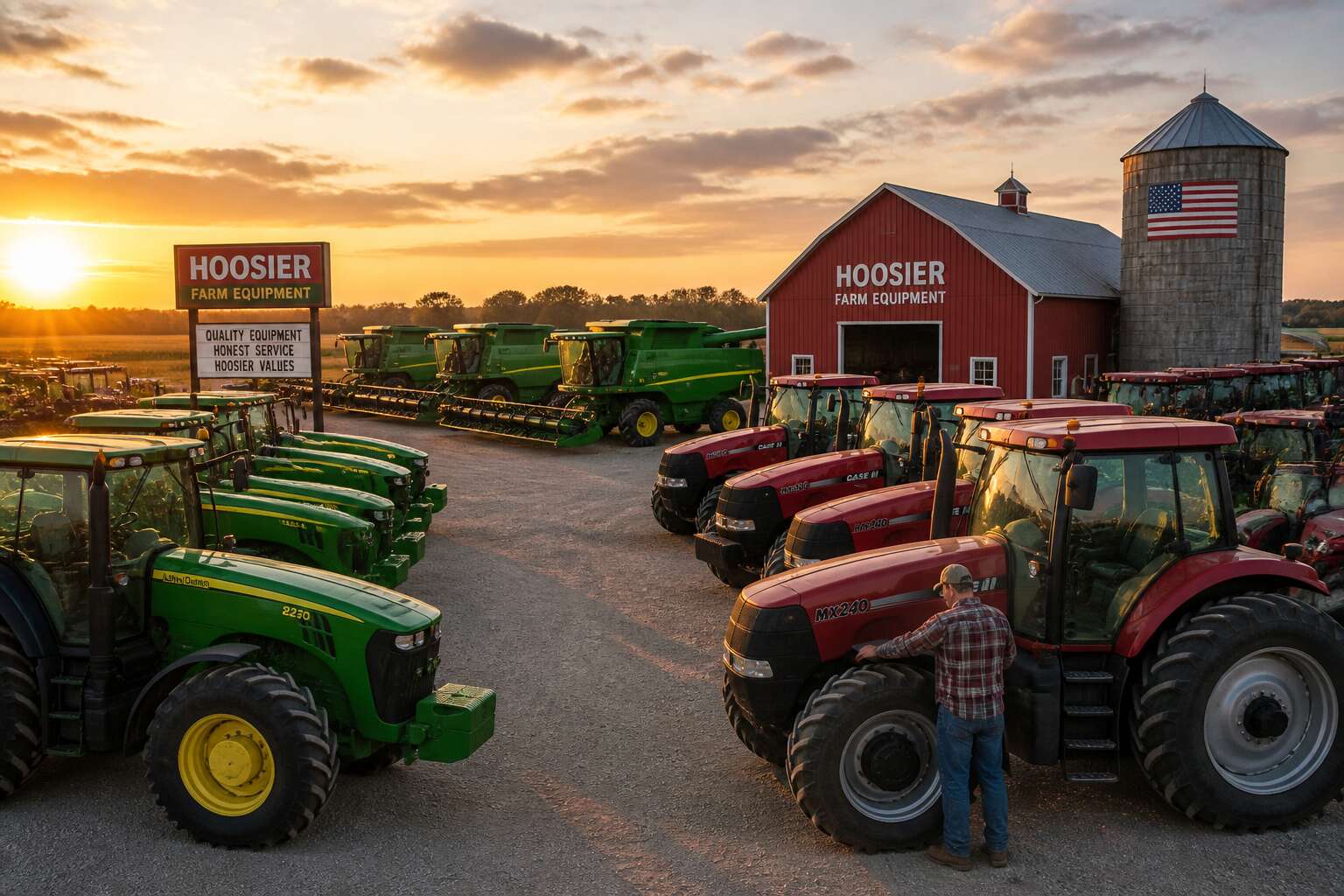
Understanding the Indiana Agricultural Equipment Market
Regional Farming Trends and Crop Profiles
Indiana’s agricultural landscape isn’t a monolith; it is a patchwork of distinct microclimates and soil compositions that dictate what thrives where. The southern rolling hills, with their thinner, rockier soil, are a world apart from the flat, dark loam of the northern lake country. This geological variance directly impacts the machinery farmers require, shaping the inventories you’ll find at used farm equipment dealers in Indiana. A combine suited for a vast northern soybean field is impractical on a steep southern pasture.
The state’s corn and soybean rotation dominates the central corridor, creating a constant demand for high-clearance sprayers and large-capacity grain carts. Yet, venture toward the urban fringe, and you see a surge in specialty vegetable and horticultural operations. These smaller farms often seek out compact tractors and precision implements.
Consider the varied demands placed on dealers:
– Northern Indiana: Heavy clay soils demand robust, high-horsepower tractors for primary tillage.
– Central Indiana: Large, flat fields require wide-width planters and high-capacity harvesting equipment.
– Southern Indiana: Smaller acreages and livestock operations favor versatile utility tractors and hay tools.
Because commodity prices fluctuate, the secondary market for equipment expands. When new machinery prices climb, more farmers turn to the used market to manage their cost basis. The most successful dealers understand this regional nuance, stocking their lots based on the acreage and crop profiles of their immediate locale. In the dairy-heavy northeast, for instance, used farm equipment dealers in Indiana often see a brisk trade in silage harvesters and manure handling equipment, a niche rarely seen elsewhere.
Common Types of Used Machinery in Demand
A farmer’s balance sheet tells the real story of Indiana agriculture. When new equipment prices surge, used farm equipment dealers in indiana see more inquiries. Dealers who track auction results and trade-in patterns anticipate demand shifts before they happen. That insight shapes their inventory.
Common types of used machinery in demand include row-crop tractors with precision guidance, combines with low separator hours, and high-clearance sprayers. Utility vehicles and skid loaders also move quickly, especially near livestock regions. Dealers often segment their lots by hours and service history.
- Row-crop tractors (100 to 300 HP)
- Combines and grain headers
- Sprayers and planters
- Hay balers and forage equipment
Understanding local soil conditions and crop rotations helps used farm equipment dealers in indiana match the right machine to each buyer. A machine that sits too long loses value, so smart dealers rotate stock based on seasonal demand. That constant recalibration keeps the market fluid.
Seasonal Buying Patterns and Price Fluctuations
The Indiana ag market moves to its own rhythm, and timing is everything. Prices for used farm equipment dealers in indiana face their most significant swings as the seasons turn. A planter priced in January looks different by April, when everyone wants it at once. The same unit that sat through summer might see renewed interest by harvest.
Understanding these trends requires attention to weather patterns and grain futures. A wet spring compresses the planting window, and demand for reliable machinery spikes overnight. Watch for these signals:
– Late winter often brings trade-ins from farmers preparing for spring financing
– Post-harvest months see more inventory as operations update their fleets
– Drought years push smaller operators to sell, while wet years keep buyers active
Prices follow a predictable curve, but surprises happen. A sudden drop in commodity prices can flood the market with used equipment. Those who follow the cycles and build relationships with local farmers get the best read on what will move next.
Evaluating Pre-Owned Farm Machinery Quality
Inspection Checklists for Tractors and Combines
The true value of a pre-owned machine often hides in plain sight, waiting for a meticulous eye to uncover it. Across the Indiana heartland, the soil conditions can be unforgiving, and a combine or tractor that looks pristine in a photograph may carry a decade of hard labor in its hydraulic lines and final drives. This is where a disciplined inspection checklist becomes your most trusted ally.
Fewer things are more romanticized than the promise of a bargain, yet the reality is grounded in mechanical specifics. I have seen seasoned operators walk a lot with a practiced grace. They listen not for the hum of the engine, but for the subtle whine of a bearing and the hesitation in a cold start. Your approach should mirror this attentiveness, focusing on the evidence of maintenance rather than the paint job.
When you walk the lot, consider these critical focal points for a thorough evaluation:
- Inspect the undercarriage and chassis for stress fractures and excessive rust, particularly on load-bearing components.
- Check the engine oil and coolant for signs of contamination or metal shavings which indicate internal wear.
- Evaluate the condition of tires and tracks, as the replacement cost can easily surpass the purchase price.
- Examine the welds and structural integrity of the loader arms or headers for prior repairs.
Ultimately, the best piece of equipment is the one with a documented service history that matches the hours on the meter. The reputation of used farm equipment dealers in indiana often rests on their willingness to let you pull an oil sample or run the combine under load. Seek out that transparency, because a machine blessed with diligent care will always outlast one that was merely stored with a tarp over it.
Interpreting Hour Meters and Maintenance Logs
A low hour meter reading is often the first thing buyers look for, but it shouldn’t be the only one. In fact, seasoned farmers know that a machine with 5,000 easy hours can be worth more than one with 2,500 hard hours. Many older units have had their meters swapped or rolled back, a practice that is more common than you might think. The real story is told in the maintenance logs and the physical wear patterns on the pedals, seat, and steering wheel.
When you are reviewing the paperwork for a tractor or combine, you are looking for consistency. The service intervals should line up with the hour marks on the meter. If the oil changes were recorded every 250 hours, but there is a gap of 1,000 hours between entries, that machine likely ran without proper lubrication. Pay close attention to the fuel system records as well. Injector replacements or pump rebuilds are a sign of quality care, whereas a lack of any fuel system work could indicate the use of dirty fuel or poor filtration.
Here is a quick checklist to guide your review of the documentation:
– Verify the serial number on the log matches the plate on the frame.
– Look for a pre-delivery inspection (PDI) form from the original sale.
– Cross-reference the recorded hours with the condition of the tires and tracks.
Remember, a used farm equipment dealer in Indiana operates in a market where the weather dictates the workload. A machine that sat in a dry shed for ten years with regular startups is a better bet than one that worked 15-hour days during muddy harvests. The maintenance log is the only way to tell the difference between the two. Trust the paper trail, but verify it against the physical evidence you see in front of you. This combination of due diligence and mechanical observation is the only way to secure a deal that pays off in the field, not just on the lot.
Red Flags in Used Equipment
There is a fine line between a professionally maintained machine and one that has been given a criminal makeover. If the engine bay gleams like a showroom floor but the hydraulic hoses resemble cracked leather, you are witnessing cosmetology, not care. I always tug the wiring loom near the battery. Wires that flop around like cooked spaghetti signal a previous owner with an unhealthy attachment to electrical tape.
Fresh paint on a loader arm deserves suspicion, especially when the welds underneath look like they were laid by a pigeon with a stick welder. A used farm equipment dealer in Indiana might assure you that the frame is solid, but the metal tells its own story. Listen for a knock that fades once the engine reaches operating temperature. That is not a charming quirk. That is a bearing sending you a goodbye note.
Watch for these three classic red flags:
- Tires with mismatched tread depths, indicating a hurried swap to mask axle damage.
- Overspray on hoses and fittings, a sure sign of a cheap paint job covering rust.
- Missing grease zerks or reworked grease points, suggesting neglected pivot joints.
Testing Hydraulics and Attachments
Some say the heart of a farm is its soil, but the cardiovascular system is the hydraulic circuit. A pre-owned machine’s demeanor reveals itself when you test the loaders and implements. The pump should respond with immediacy, not a lazy groan. Listen for the distinct whine of a struggling hydraulic motor, a sound that often precedes a catastrophic failure of the main pump. Cycle the lift arms fully, checking for drift once they reach maximum height. A bucket that sinks noticeably within thirty seconds points to leaking cylinder seals. This wear is costly to remedy, and you should price that into any offer. Check the attachment plate for excessive play. A sloppy fit between the quick attach and the implement suggests years of hard use.
Before you trust the machine with your livelihood, put the hydraulics through a proper gauntlet:
1. Operate the remote valves under full load, not just in free flow.
2. Inspect the condition of the quick couplers for damage or dirt contamination.
3. Observe the hydraulic fluid return line for bubbles, which indicate intake leaks.
A wise shopper always asks about the service history of the valves and filters. When you finally speak with used farm equipment dealers in indiana, ask to see a demonstration with a heavy attachment, not a light mower. The strain of lifting a full bale will expose weaknesses that an idle revving engine never will. You want to see clean, decisive movement. Any hesitation, grinding, or jerky motion is a negotiation pointahan. Remember that the longevity of an attachment depends on its use, and a machine that was used purely for loading is a different animal than one used for digging.
Finding Trustworthy Equipment Sellers
Local Auctions vs. Dealerships
Local auctions carry real risk, and the terms are final. Dealerships often provide service records and a warranty, though their prices carry overhead. Auction bargains exist, yet they come with no promise of support. The choice shapes your season. When you walk the lots of used farm equipment dealers in Indiana, you are negotiating a relationship. Each purchase includes:
- Auctions offer immediacy, but buyers must handle their own inspection and transport.
- Dealerships typically offer history reports, a service bay, and a parts counter.
- An auctioneer holds no obligation once the gavel falls.
A dealer with those resources has a stake in your success. Repair costs against savings tell you which path to trust, and used farm equipment dealers in Indiana rely on that reputation season after season.
Online Marketplaces and Classifieds
“That tractor was listed three hours ago, and I’ve already got two offers,” the seller said, his voice crackling through the phone. That is the reality of the modern used market. You are no longer limited to a single county’s worth of inventory. The digital landscape has opened up a direct line to sellers across the entire state, but that access demands a sharper eye.
The challenge with online marketplaces is the disappearance of the handshake. You cannot hear the engine run through a screen, and a photograph can cleverly hide a cracked manifold. When you browse classifieds, you are essentially conducting a pre-interview. The good ones will answer specific questions about maintenance intervals without hesitation. The ones to avoid give vague answers about the previous owner. You must verify the serial number and cross-reference it with the manufacturer. This simple step often reveals whether the hours listed are actual or a fiction of the seller’s imagination.
Once you have narrowed your search, the conversation shifts to logistics. A private seller might offer a great price, but you carry the entire burden of transport and financing. This is where the appeal of established businesses re-enters the picture. Many of the most reputable used farm equipment dealers in Indiana maintain a robust online presence specifically to handle out-of-state buyers. They understand the paperwork involved in moving a combine across state lines, and they have the resources to prepare the machine for a long haul.
To streamline your search, consider these digital tools:
– Auction platforms for quick liquidation, but budget for buyer’s premiums.
– Tractor-specific forums where owners discuss real-world reliability.
– Dealer websites that offer live video walkarounds of the unit.
– Implement dealer networks with search filters for specific engine hours.
Ultimately, the goal is to use the internet to find the machine, but let a physical inspection certify the purchase. While the online world offers endless choices, it also attracts less scrupulous sellers. However, the sheer volume of listings can be an advantage. By comparing the asking price of a private seller against the stocked inventory of used farm equipment dealers in Indiana, you establish a baseline for the true market value. The data is there; you just have to be disciplined enough to read it.
Reading Reviews and Customer Testimonials
A dealer with forty glowing testimonials might still sell you a worn-out transmission. Reviews are useful, but they require a skeptical eye. When I researched used farm equipment dealers in indiana, I noticed patterns in both praise and complaints. One recurring theme: buyers who mention “warranty honored” or “they replaced a faulty part” are worth more than vague “great people” comments. The specifics indicate a dealership’s commitment after the sale.
Look for testimonials that name a technician or service manager. That suggests real interactions, not generated PR. Search for reviews from farmers with the same implement type as yours.
- Post-sale follow-up mentions
- Responses from the dealer to negative reviews
- Talk of transparent paperwork and hour log verification
That last point matters. A customer confirming the dealer shared original service records without prompting signals a trustworthy operation. Treat reviews as one data point among many, but one that can reveal integrity.
Dealer Certification and Warranties
A used tractor is a calculated bet, even when the paint gleams under the Hoosier sun. The true measure of that wager rests not in the iron itself, but in the paper that accompanies it. When you are evaluating used farm equipment dealers in indiana, the presence of a formal certification process and a transferable warranty separates the professionals from the lot operators. A dealer who certifies their machinery has performed a systematic inspection, replacing wear items that fail without warning, such as belts and bearings. This process, when documented, transforms a gamble into a procurement decision.
However, certification is only half of the equation; the warranty is the shield against the unpredictable. You need to understand precisely what is covered, not as a marketing slogan, but as a written contract. A robust policy typically includes:
– Coverage for major drivetrain components, including the engine and transmission.
– A clear term length, measured in hours or months, whichever arrives first.
– A defined claims procedure that does not require you to transport the machine to a distant facility.
– A transparent list of exclusions, such as wear items or damage from improper storage.
The most reliable dealerships in the region offer powertrain protection that acts as an insurance policy against a failed transmission or a cracked block. Without this, a repair bill can easily exceed the purchase price of the entire unit. Furthermore, consider the distinction between a dealer warranty and a manufacturer warranty. Some used farm equipment dealers in indiana sell machines that still carry factory support, which is often the most valuable asset in the deal. Ask for the original sales contract and any transfer documentation to confirm that the coverage is valid under your ownership.
Ultimately, the strength of the warranty reflects the dealer’s confidence in the equipment’s condition. A handshake and a pat on the fender are reassuring, but a signed document with clear terms and a financial commitment from the seller is the only assurance that matters when the harvest clock is ticking. This layer of security, often overlooked in the pursuit of a low sticker price, is what actually protects your bottom line.
Networking through Farming Communities
Finding the right used farm equipment dealers in Indiana often starts long before you set foot on a lot. The most reliable intelligence rarely comes from advertisements or glossy inventory lists. It comes from the informal network of farmers who have already navigated the purchase process, tested the machinery, and lived with the results. Their experiences, both positive and negative, form a valuable map of the local market that you can use to your advantage.
Your first step should be to engage with this network directly. Attend local farm bureau meetings, cooperative gatherings, or even the busy breakfast counter at a small-town diner. These are the places where reputations are built and broken. Ask specific questions about service departments and their responsiveness. Inquire about how transparent a dealer was about a machine’s history. A pattern of honest answers is a strong signal. Conversely, a dealer who is vague or defensive during initial conversations will likely remain that way after the sale.
To structure your investigation, consider these practical steps:
– Identify the top three dealers in your specific county or region.
– Visit their physical locations to observe the condition of their inventory.
– Ask to speak with a service technician, not just a salesperson.
– Request contact information for a previous customer who purchased similar equipment.
Beyond the experience of others, your own observations matter. When you visit potential used farm equipment dealers in Indiana, pay attention to the small details. Is the lot organized? Are the machines clean and well-maintained, or do they show signs of neglect? The state of the inventory often mirrors the dealer’s overall operating philosophy. A machine that has been properly stored and serviced tells a different story than one left uncovered in a back field. Trust your instincts during these visits, but also verify your impressions with the concrete facts you gather from your conversations within the farming community. This combination of local knowledge and direct observation will serve you better than any single factor.
Financing and Negotiating for Used Ag Equipment
Tips for Getting the Best Price
Financing Options for Farm Equipment
Financing used agricultural machinery requires a clear understanding of your cash flow and credit position. Many used farm equipment dealers in indiana offer in house financing, but comparing rates with local banks and farm credit unions often yields better terms. Leasing is another path, especially for equipment with shorter useful life. When negotiating, remember that the purchase price is only half the equation. Interest rates and repayment periods affect your total cost significantly. Dealers may be willing to adjust terms even if the sticker price stays fixed. Ask about seasonal payment plans that align with harvest cycles. A strong down payment can unlock lower rates. However, be wary of extended contracts that mask high fees. Here is what to scrutinize:
- Annual percentage rates versus simple interest.
- Early payoff penalties.
- Maintenance or warranty inclusions.
Always request a written breakdown of every cost before signing.
Trade-In Strategies
The initial quote is merely the opening note in a longer negotiation. Savvy farmers understand that the trade in value of their old iron often dictates the final arithmetic. Dealers may lowball your current machine to fatten their margin on the used tractor you are eyeing. The trick is to negotiate the trade in figure first, before discussing the price of the newer unit.
Many of the most reputable used farm equipment dealers in indiana understand that a fair trade offer builds a lasting relationship. They want your future business, not just the sale today. Use this to your advantage by shifting the conversation away from a discount on the new model and toward an honest assessment of your outgoing equipment. A dealer flush with inventory might be more flexible on your trade in because they know the market value of your piece.
To get the best result, consider these points:
– Research your equipment’s value via online auction results or classifieds before you enter the lot.
– Detail your machine thoroughly before the appraisal begins.
– Ask if the trade in allowance can be boosted if you finance through their program.
The dealer wants to move units quickly to reduce lot carrying costs. Your old combine or plow is their risk to manage. By focusing your energy on the trade in allowance, you can often secure a better financial outcome than haggling over a stubborn sticker price. Compare offers from several dealers in the region to find the most favorable appraisal.
Understanding Appraisals
Securing financing for pre-owned agricultural machinery often feels more complex than purchasing new. The financial layers involved with used farm equipment dealers in indiana require a clear understanding of how lenders view depreciating assets. Interest rates on used units are typically higher due to increased risk, and loan terms are frequently shorter. Your credit history and the machine’s age will directly shape the offer you receive, so prepare those documents accordingly.
The appraisal process is the cornerstone of any deal. Dealers base their loan amounts on a wholesale valuation that may differ from the retail price tag. A thorough inspection by your own mechanic can uncover wear that might not justify the asking price. Focus on securing a loan that reflects the actual condition of the tractor or combine. For example, consider these negotiation points when reviewing the valuation:
– Compare the dealer’s appraisal against recent auction results for similar models.
– Verify that the machine’s hours align with the condition of the engine and hydraulics.
– Request a detailed breakdown of the interest rate and any origination fees.
Ultimately, the goal is to align the financial structure with your farming operation’s cash flow. A higher down payment can offset a steeper interest rate, while a shorter loan term might save you money over the long run. Understanding these financial levers empowers you to walk away with a deal that works for your balance sheet, not just the dealer’s sales quota. The true measure of a good transaction is in the manageable monthly payments that follow.

0 Comments