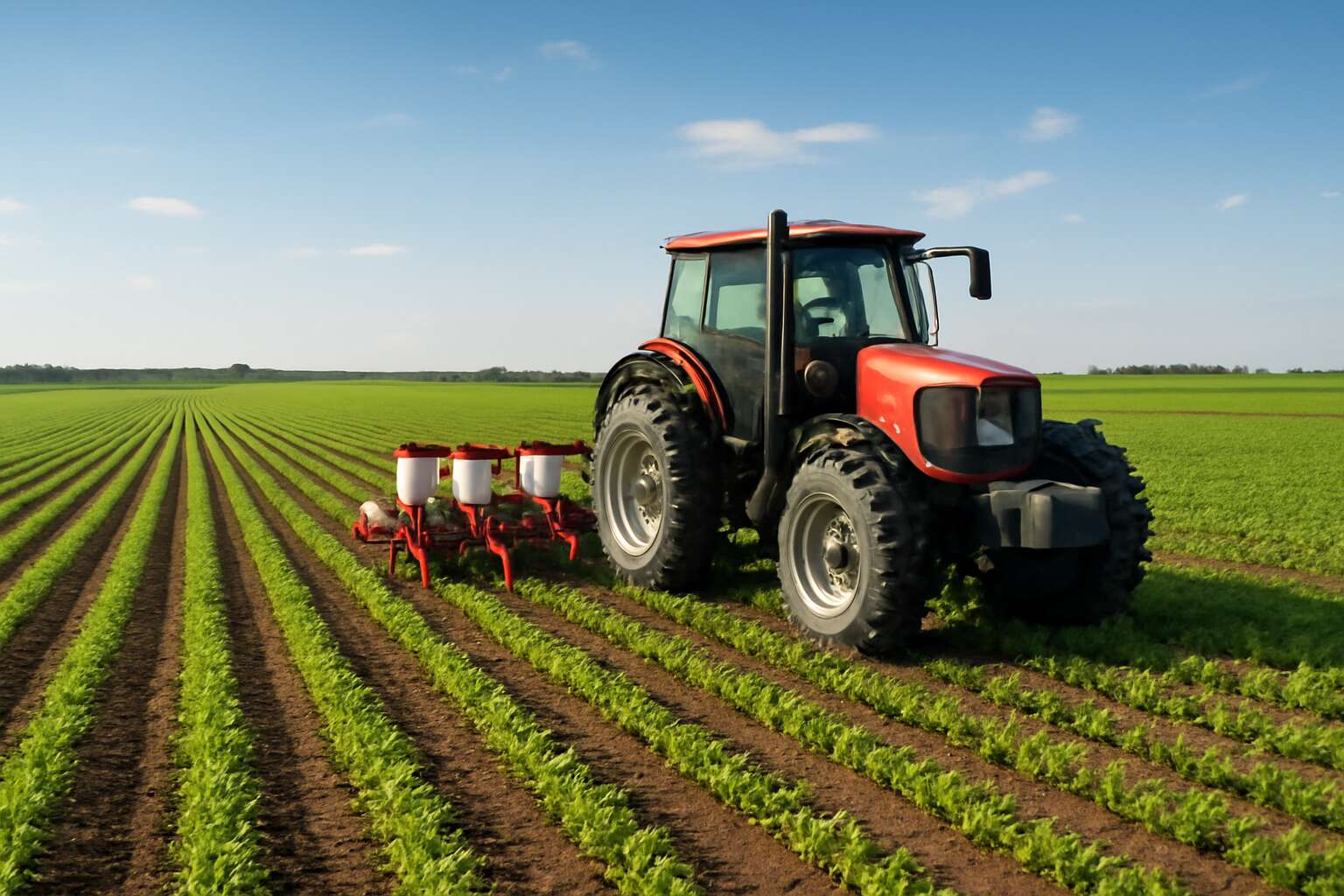
Evolution of farm equipment usage in modern farming
Precision agriculture and variable-rate technology
In the fields of South Africa, a quiet revolution hums at dawn. A recent industry report shows precision agriculture adoption has doubled in five years, nudging farmers toward data as dependable as rain. This is how farm equipment is being used—machines listen to soil and weather, translating whispers into maps.
In practice, precision agriculture and variable-rate technology sculpt a mindful harvest. Drones skim fields, sensors track moisture, and variable-rate planters sow where life remains. It feels magical, yet the numbers prove it: inputs shrink where soils need less and yields rise where sunlight lingers.
- Reduced chemical and water usage
- Targeted nutrient applications
- Real-time field diagnostics
From the Karoo to Limpopo, farmers listen to land as a partner. The evolution of farm equipment usage is a dialogue with soil and season, a modern spell for steadier, saner growth.
Autonomous farming equipment and robotics adoption
South Africa’s dawn carries a heavier hum than the old diesel of yesteryear—a quiet, unruly march toward autonomous farming equipment and robotics. A recent SA agritech ledger shows autonomous farming equipment adoption has surged by over 40% in five years. This is how farm equipment is being used: machines listen to soil, weather, and season, moving with patient, spectral precision.
In the field, autonomous tractors glide along invisible rails, and I watch as robotic weeders prune the understory, and harvest-assist systems whisper when fruit is ripe! Data-driven brains govern every motion, translating moisture and microclimates into a choreography that steadies output while thinning the shadows of risk. The old hand and the old habit yield to algorithmic grace and stubborn reliability.
- Autonomous tractors and precision sprayers trace data-driven routes.
- Robotic weeders and harvest-assist units sharpen timing with real-time cues.
Sensor networks and real-time field data analytics
South Africa’s fields are listening back. A whisper from the agritech ledger speaks of sensor networks expanding across estates, proving that how farm equipment is being used is evolving from routine to responsive. The field becomes a living map, and data guides the weather with patient authority.
Real-time field data analytics fuse soil moisture, microclimates, and wind shifts into a choreography that guides irrigation, fertilization, and row spacing. Farmers in SA watch dashboards that translate every nuance into actionable edge decisions, letting machines adjust themselves while the sky keeps score.
- Sensor networks knit soil, moisture, and temperature into live maps.
- Edge devices translate field signals into immediate machine actions.
- Analytics dashboards turn weather into harvest-ready timing.
- Predictive models reduce waste and sharpen risk management.
These systems float between heritage and tomorrow, where a farmer’s intuition tunes to data’s rhythm and machines answer the chorus with measured grace.
Electrification and alternative power sources for tractors and implements
Electric traction is no longer a novelty; it’s rewriting the rhythm of the field. In South Africa, the roar of diesel yields to a whisper of efficiency. This is how farm equipment is being used, shifting from brute force to a balance of storage, sun, and design.
From battery-electric tractors to solar-assisted charging, the power mix is practical, not theoretical.
- Battery-electric drives with regenerative braking
- Solar charging for field operations
- Hybrid transmissions with electric assist
- Hydrogen or biofuel-ready power units
These choices reclaim hours and reduce emissions.
Such shifts honor both heritage and tomorrow—fields once dependent on diesel now listen to the quiet hum of innovation, answering with grace when weather turns.
Applications of farm equipment across farming operations
Tillage, seeding, and planting equipment modernization
Across South Africa, modern tillage and planting gear are reshaping workloads. Early adopters report a 15% reduction in soil disturbance and a 20% faster planting window, proving that how farm equipment is being used can shift yields and resilience!
With tillage, farmers lean toward lighter passes, reduced soil disruption, no-till drills, and seeders that work with moisture, not against it. Seeding and planting equipment are evolving too: multi-function drills, width-flex machines, and depth-control features keep seed placement precise in variable soils.
- No-till drills that minimize soil disturbance
- Air-seeders for accurate depth and pace
- Depth and seed-rate controls tuned to moisture
These updates reflect South Africa’s climate realities and rural networks, where equipment choices shape what farms can endure year after year. These updates show how farm equipment is being used in climate-smart farming here.
Irrigation systems and water management machinery
Water is the soil of modern farming, as a veteran Karoo grower muses. In South Africa, where drought lingers and every drop counts, irrigation systems and water management machinery stand as strategic allies. This is how farm equipment is being used to conserve precious water. Center pivots carve quiet circles in fields, while drip networks deliver moisture right to the root. Solar-powered pumps lift borehole water to storage tanks, feeding precise, pressurized lines that bend with the land.
Across farming operations, irrigation strategies tailor to crop, soil, and season. A concise toolkit reveals how water management machinery extends the rhythm of the fields with reliability and grace—Even the quiet machines feel like irrigation poetry!
- Drip irrigation networks that minimize evaporation and runoff
- Center-pivot systems to cover large blocks with even distribution
- Solar-powered pumps connected to storage tanks for off-grid resilience
Crop protection and maintenance machinery
South Africa’s sun-drenched fields test every crop’s mettle. Crop protection and maintenance machinery stand as vigilant guardians—calibrated sprayers delivering precise droplets, shielded booms that hug the canopy, and mechanized pruning tools that safeguard trellises between seasons.
Witnessing how farm equipment is being used across varied terrains reveals a quiet revolution: less drift, healthier leaves, and steadier yields as gear respects plant physiology rather than imposing brute force.
- Calibrated sprayers with shielded booms for uniform coverage
- Mechanized pruning and trellis maintenance tools for rapid canopy care
- Protective netting and shielding devices to reduce disease pressure
In South Africa’s diverse landscapes, crop protection routines powered by thoughtful machinery help crops endure drought, pests, and disease while conserving resources—turning daily farming into a voyage of careful stewardship.
Harvesting and post-harvest equipment optimization
In South Africa’s fast-moving markets, post-harvest losses erase value—often 10-15% of perishable crops never reach shelves. This is where harvesting and post-harvest equipment optimization shines: how farm equipment is being used to maintain quality from field to table, with careful handling every step of the way.
Smart harvesters with gentle grippers, robust sorting lines, and conveyors that cradle produce. They cut handling times and bruising, a quiet mercy in the belt’s hum. When paired with packing automation, these systems boost throughput while keeping safety in focus!
- Delicate handling harvesters minimize pressure
- Optical sorting with real-time checks
- Cold-chain friendly conveyors and palletising
Across South Africa’s citrus, wine, and fresh-produce sectors, post-harvest technology aligns with climate realities and power reliability to protect freshness after harvest.
Storage, handling, and processing equipment
South Africa’s cold-storage warehouses hum with a patient tension as the sun sinks. Losses still creep at 10-15% of perishable cargo, but the arithmetic of storage, handling, and processing equipment can rewrite the numbers. This is how farm equipment is being used to steady the supply chain from chilly shelf to sunlit kitchen, with conveyors that cradle crates and robotic arms that greet each fruit with the gentleness of a midnight kiss.
- Cold-chain friendly conveyors that cradle crates and keep temps steady
- Automated palletizing and stretch-wrapping lines for secure transport
- Vacuum packaging and labeling stations for traceability and freshness
These systems turn routine handling into a quiet, reliable ritual—preserving quality from cold room to consumer’s table with a measured, almost spectral grace.
Impact on sustainability, productivity, and profitability
Resource efficiency and water management
On South Africa’s weather-beaten plains, the field hums with a quiet, electric efficiency as land and machine move in synchrony. Early adopters report up to 25% more productivity when gear works in concert with the land. This is how farm equipment is being used to fuse sustainability with a sharp bottom line—cutting waste, conserving water, and turning every hectare into a living epic of resilience.
- Micro-irrigation networks with precise flow control to curb runoff and evaporation
- Autonomous field units that reduce passes, soil compaction, and fuel usage
- Hybrid power and energy-efficient implements that sustain throughput with lower emissions
Such devices let farmers stretch margins while keeping the soil fruitful and the water table steadier—profitability blooming where stewardship leads.
Emissions reductions and electrification trends
Across South Africa’s weather-beaten plains, farmers report up to 25% productivity gains when how farm equipment is being used harmonizes with the land’s stubborn rhythm. That quiet synergy makes sustainability a reliable profit engine—cutting waste, conserving water, and turning every hectare into a living epic of resilience!
I watch the impact on sustainability, productivity, and profitability grow as equipment becomes a translator between soil and system. Emissions reductions and electrification trends redraw the ledger: electric drives, hybrid power, and smarter energy management squeeze fuel use while lifting throughputs. Here are the currents reshaping the field:
- Electric drives on tractors and implements cut emissions and noise.
- Hybrid power and energy recovery lift margins while fading the fuel bill.
- Smart scheduling and modular design reduce idle time and wear.
Durable, modular designs promise longer lifecycles and calmer capital turnover.
Labor safety, ergonomics, and workforce productivity
Across South Africa’s fields, a quiet stat speaks volumes: when how farm equipment is being used aligns with the land’s stubborn rhythm, productivity rises by up to 25%.
Labor safety and ergonomics are no longer afterthoughts; they shape how we work.
- Safer cabins and smoother controls cut fatigue and boost uptime.
- Adjustable seating and intuitive interfaces reduce strain and improve precision.
These gains translate into steadier profitability and a more sustainable footprint, while the people who tend the fields stay central to the harvest.
Economic viability, ROI, and total cost of ownership
Across SA’s fields, this is about how farm equipment is being used to align with the land’s stubborn rhythm. When implements are tuned to soil moisture, wind, and seasonality—minimizing disturbance, reducing waste, and extending machine life—the fields recover faster, productivity rises, and sustainability shifts from risk to backbone.
Economic viability rests on a clear balance between upfront cost and the long tail of performance. ROI grows as downtime falls, energy use shrinks, and service intervals stretch.
- Total cost of ownership considerations: purchase price, maintenance, parts, and resale value.
- ROI drivers: yield stability, fuel efficiency, and longer asset life.
- Reliability value: reduced field interruptions and smoother operations.
Even in SA’s ever-changing climate, these trends whisper through the furrows, turning numbers into a living harvest.
Regulatory, policy, and sustainability reporting considerations
Across South Africa, the way we deploy tractors and harvesters shapes more than yields; it sculpts the land’s health. When equipment responds to soil moisture, wind, and seasonal nuance, emissions fall and soils breathe easier. A striking 20% uptick in resource efficiency is possible as energy use drops and compaction eases. how farm equipment is being used becomes the quiet engine of stewardship.
Productivity and profitability follow when downtime is predictable and maintenance fits the field’s rhythm. Real-time data translate into steadier yields and longer asset life, while responsible governance—under King IV and SA sustainability reporting norms—demands tracking energy, water, and emissions. In this view, the way farming equipment is used doesn’t just boost the ledger; it clarifies the social license and future viability of operations.
Future trends and considerations for buyers and operators
AI, machine learning, and predictive maintenance in machinery
Across South Africa’s fields, the hum of AI-driven machinery hints at tomorrow’s harvests. A growing chorus of data—vibration, fuel use, and weather patterns—drives predictive maintenance, powered by machine learning, and some industry voices report up to 25% fewer unplanned outages. This is how farm equipment is being used to turn field whispers into dependable performance.
- AI-enabled condition monitoring that flags wear before it becomes a fault
- Remote diagnostics that keep technicians connected to the field from dispatch hubs
- Digital twins and scenario testing to optimise spare parts and downtime
Buyers and operators weigh data quality, cybersecurity, and upfront costs; the long horizon of reduced downtime and longer asset life sweetens the deal.
This evolving chorus of sensors and software makes the land feel alive, as if the season itself learns to expect rain, seeds, and sun.
Financing, leasing, and ownership models for advanced equipment
Financial futures for harvests are the new ploughshares. In South Africa’s fields, the capital plan is as crucial as the seed plan, and the mood is one of flexible terms! “Ownership is cash flow, not a badge,” says a senior agtech financier.
Options shaping the horizon:
- Pay-as-you-go and usage-based models lower upfront barriers and align payments with the season.
- Leasing bundles fold maintenance, telemetry, and upgrades into a single monthly fee.
- Asset-as-a-service converts capital expense into operating cost with predictable cash flows.
In a market marked by volatile input costs and variable rainfall, this shift helps ensure resilience. It keeps how farm equipment is being used aligned with real-world conditions, while South African fleets stay nimble across seasons.
Maintenance, uptime optimization, and service networks
In a season where rainfall behaves like a temperamental celebrity and diesel is a plot twist, uptime is the true profit lever. Buyers are embracing service-ready fleets, maintenance that anticipates wear, and flexible terms that keep the tractor rolling. Understanding how farm equipment is being used across the harvest calendar helps tailor support that doesn’t lag behind the weather.
- Predictive maintenance through remote diagnostics and wear forecasting
- A robust service network across South Africa, combining OEM and independent technicians
- Local spare-parts logistics to slash downtime during peak seasons
In the South African context, lenders and insurers increasingly align warranties with uptime expectations, while telematics and training networks give operators the confidence to push through unpredictable seasons without breaking the bank.
Data privacy, cybersecurity, and interoperability standards
Uptime is the new profit, and in South Africa’s fields the future wears a patchwork of grit and code. As seasons swing from drought to downpour, buyers crave equipment that keeps humming under pressure. Understanding how farm equipment is being used across the harvest calendar informs smarter purchases, smarter maintenance, and a readiness that feels almost supernatural.
- Data privacy and ownership
- Cybersecurity and incident response
- Interoperability standards and open APIs
Data privacy, cybersecurity, and interoperability standards will shape who you partner with, and how fast you adapt to unpredictable seasons. In South Africa, lenders and insurers increasingly align warranties with uptime expectations, while open ecosystems and edge devices keep operators nimble without breaking the bank.
Training, upskilling, and operator certification programs
Across South Africa, uptime is the new profit, and upskilling is the currency—about 68% of farmers say it matters more than rainfall in the long run. This mindset reshapes what buyers value and which operators earn their stripes.
Future training hinges on operator certification, micro-credentials, remote learning, hands-on simulators, and partnerships with SAQA and SETAs. Such programs ensure everyone understands how farm equipment is being used across seasons and can adapt to power fluctuations, data demands, and safety standards.
To meet these needs, providers blend certification with flexible, bite-sized learning so operators grow on the job.
- Enhanced uptime through standardized skill sets
- Improved safety and ergonomics on the shop floor
- Better data literacy and field decision-making

0 Comments