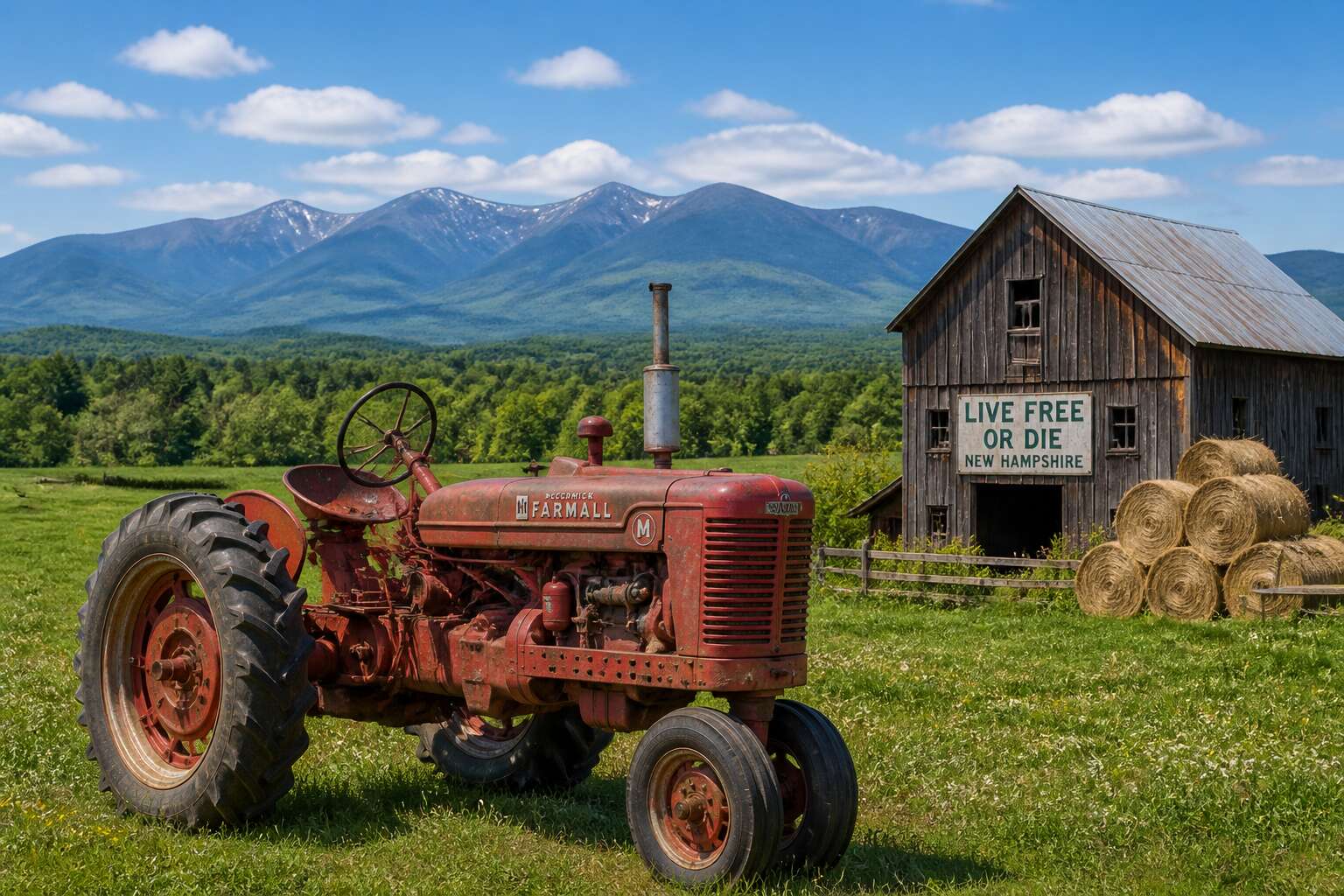
Assessing Your Operational Requirements
Matching Equipment Size to Acreage
Too many farmers buy what the brochure promises, not what their land demands. A 200 hectare maize operation needs different horsepower than a 10 hectare vegetable plot. South African farms vary enormously, from Free State grain belts to Western Cape vineyards. Oversized equipment wastes diesel and compacts soil. Undersized machinery loses precious time during harvest windows.
Assess your terrain honestly. Slopes, drainage, and field boundaries all affect performance. A machine that thrives on flat, open ground will struggle in tight valleys.
When evaluating used farm equipment nh listings, consider these factors:
- Peak workload hours during planting and harvest.
- Headland turning space and row width compatibility.
- Weight limits for existing sheds and transport routes.
Used farm equipment nh stock often arrives with impressive spec sheets, but the real question is whether the size fits your paddocks. Measure your gate widths, check your laneways, find out what your neighbours actually run.
Identifying Season-Specific Needs
Every July, the Free State whispers a grim ultimatum to the planter: you have ten days, or the rain takes everything. Seasonality is not a footnote in equipment selection; it is the entire ledger. When I assess used farm equipment nh listings, I first map the calendar against the machine’s capacity curves. A baler that excels in dry January can suffocate in March’s damp.
I ask how many hectares per hour your harvester must devour during the narrow maize window. Then I check the cultivator’s teeth for wear patterns that betray rushed autumn workloads. The perfect used farm equipment nh deal emerges when the seasonal rhythm aligns with the metal’s history.
- Planting weeks demand high-horsepower tractors with precise hydraulic response
- Harvest months require machines that can run twelve hours without heat failure
- Off-season maintenance creates space for cheaper, slower implements
Your frost line, your rainfall curve, your neighbour’s milling schedule. Each dictates whether that idle combine is a bargain or a coffin with wheels.
Considering Storage and Maintenance Capacity
A machine that cannot be stored properly is not an asset; it is a liability wearing a coat of paint. Many buyers scrutinise engine hours and tyre tread, yet they ignore the silent killer of agricultural value, which is exposure. When you evaluate used farm equipment nh, you must first inspect the physical space where the machine will live. A combine that sits under a leaking oak for eight months will develop electrical gremlins that no mechanic can fully exorcise.
The conversation about capacity extends beyond the shed. Consider your own time budget for maintenance. Some implements demand daily greasing and belt checks, while others tolerate neglect. Your operation’s labour pool determines which category you can afford. I recall a farmer who purchased a pristine used farm equipment nh hay rake at a superb price, only to discover it required a weekly bearing repack that his one-man crew simply could not accommodate.
Concrete costs also accumulate in less obvious ways. Every piece of steel you own carries a carrying cost, from insurance premiums to the opportunity cost of the land it occupies. A crowded yard forces constant reshuffling, which leads to bent pins and dented panels. Before you commit to any purchase, calculate your storage square footage per horsepower. That number will tell you more about your true capacity than any spec sheet.
For many operations, the solution is a tiered approach to acquisition. Machines that work year-round deserve permanent shelter. Seasonal tools can share space or live under heavy tarps with proper ventilation. The calculus changes when you consider the local climate. A drill used for three weeks in spring will fare differently than a spreader that works through winter slush. That spreader might be the one machine where paying more for a newer model with sealed bearings makes sense, even when browsing used farm equipment nh listings. The best deal is the one you can actually maintain, not the one with the lowest sticker price.
Budgeting for Repairs and Parts
Your operational requirements extend past the field. When budgeting for used farm equipment nh, you need to know how much downtime you can absorb. A machine that looks affordable on paper can drain your cash reserves if parts are scarce or expensive. I once saw a farmer lose more waiting for a hydraulic pump than the machine cost.
Begin by listing predictable repairs: wear parts, filters, belts, hoses. Add a contingency fund for the unpredictable. Ask your local dealership about parts support. Some brands have strong networks in South Africa; others don’t. Factor in your own skills. Will you need a technician?
When evaluating any used farm equipment nh listing, use a checklist:
- Cost of tyres and undercarriage wear parts.
- Availability of manuals, filters, and hydraulic hoses.
- Expected component lifespan based on engine hours.
Check prices before you negotiate. Hidden costs tilt the true budget.
Understanding Local Crop and Livestock Demands
The Karoo sheep farmer rarely needs a 500hp tractor built for maize. Yet I have watched them buy one because the price looked right. Crop and livestock demands should dictate machinery choices before you search for used farm equipment nh. A machine that ignores local realities becomes an expensive mistake.
Assess your district first. A dairy running on irrigated lucerne needs precise balers, not massive tillage tools. Free-range poultry operations need feed mixers more than combines. Ask what your neighbours actually run. Their choices reflect years of experience and repair records.
Use these local signals to guide your search:
1. Water infrastructure. Borehole pumps and windmills require specific maintenance gear.
2. Livestock breeds. Handling systems must match the size and temperament of your animals.
3. Harvest windows. Short wet seasons force machinery to work fast, so reliability outweighs power.
Buying used farm equipment nh without this assessment is guesswork.
Exploring Local Marketplaces and Dealerships
Independent Dealers Across the Granite State
The search for used farm equipment nh extends beyond online listings into the physical spaces of local marketplaces and independent dealers across the Granite State. These dealers often have generations of knowledge stored in their barns along with service records. Speaking with them reveals the service history of each machine, something a photograph cannot convey.
When I visit a dealer, I look for a few things:
- Request service logsand repair receipts.
- Inspect how the dealer stores equipment, as neglect shows in rust.
- Ask about the previous owner’s operation, because wear patterns differ.
Independent dealers sometimes offer flexible terms that larger chains cannot match. They understand local soil conditionsand seasonal rhythms, which informs their advice. Trust builds slowly, but a good dealer becomes a long term resource for sourcing partsand honest opinions.
Online Listings and Auctions
The romance of the hay wagon, the sturdy promise of a steel plow, these are often found not in the glow of a showroom but in the quiet glow of a screen. The digital marketplace has flattened the Granite State, turning distant barns into accessible archives of machinery. Scrolling through listings for used farm equipment nh becomes a sort of cartography, mapping the agricultural history of the region one photograph at a time. The clarity of a machine’s past is often revealed in the pixelated details, from the wear on the loader bucket to the patina of the paint.
Yet, the auction ring offers a different kind of theatre. Here, the bidding war is a public performance of valuation. It is a space where the careful observer reads the room as much as the machine. One must approach these sales with discipline, as the energy can be infectious.
– Set a maximum price before the gavel falls.
– Arrive early to inspect the equipment for hidden damage.
– Watch for the seasoned farmers; they know which lots hold true worth.
The online listing provides a catalogue of possibilities, while the auction provides the crucible of decision. In this way, the search for used farm equipment nh is a dual pursuit, a balance of introspection and action, where both the screen and the sale yard serve as vital proving grounds for the next chapter of a working farm.
Farm Expos and Agricultural Events
There is a limit to what a screen can tell you about a machine. The thrum of a diesel engine, the specific squeak of a worn pivot pin, these are not transmitted through a Wi-Fi signal. For that, you need to get your boots dirty. The local dealership remains the best place to experience the tactile reality of used farm equipment nh. You can kick the tires, check the hydraulic fluid, and listen to the salesman’s pitch, which is often worth the price of admission alone.
Beyond the showroom, the farm expo is a social event disguised as a trade show. It is a congregation of farmers, dealers, and tinkerers. Walking the aisles, you will find equipment that has stories to tell, often with a layer of fresh grease to hide the scars. This is a chance to see what is actually being used in your region, not just what is being advertised.
When scouting these events, a method to the madness helps.
– Check the undercarriage of any machine; rust here is a dealbreaker.
– Ask the seller about the original owner, not just the machine’s hours.
– Compare prices on similar models across different booths.
– Strike up a conversation with the parts department staff; they know which models are troublesome.
The atmosphere at these events can be persuasive, but the value lies in the unspoken knowledge you gain. You see the used farm equipment nh in the context of the land it works. A tractor that looks pristine on a lot might look like a workhorse next to the hay baler it has been pulling for a decade. The expo offers a glimpse into the ecosystem of a farm, not just the iron.
Networking with Local Farming Communities
Local marketplaces in New Hampshire move at their own pace. The coffee is hot, the conversation wanders, and used farm equipment nh changes hands based on trust as much as price. A seller might ask what you plan to haul before quoting a number. That is not small talk; it is due diligence.
Networking with the farming community means showing up more than once. Strangers at a flea market become sources of information after a few seasons. The farmer who rebuilt a baler in his shed knows every weak point. He will tell you if you ask.
Consider these tactics for local networking:
- Ask about equipment history at the co-op, not the auction.
- Attend a town meeting or livestock auction.
- Bring cash and a willingness to listen.
The marketplace rewards patience. The best deals on used farm equipment nh often surface after the third conversation, when someone remembers a neighbor downsizing.
Evaluating Warranty and Return Policies
An old dealer once told me that a handshake on used farm equipment nh is worth more than a warranty, but he also had a lawyer on retainer. Local marketplaces rarely offer returns. Dealerships, however, often provide a 30 day powertrain guarantee, though the fine print matters.
When evaluating used farm equipment nh, consider these checks before signing anything:
- Ask who covers transport if the machine fails.
- Request a written return window, even if it is three days.
- Verify the warranty transfers to you, not just the original buyer.
At a dealership, test the hydraulic system yourself. A salesperson’s shrug can cost you later. Remember that a return policy is only as good as the person honouring it. The fellow selling from his barn might fix a problem with a handshake. The dealership will direct you to a form.
Key Factors in Evaluating Equipment Condition
Checking Engine Hours and Maintenance Logs
Engine hours reveal what a clean paint job cannot. On used farm equipment nh, those hours tell how hard a machine worked. A tractor with 2,000 hours and full service history often beats one with 800 hours and no record. Check the hour meter, but verify it. Worn pedals and sagging seat will confirm it.
Read the maintenance logs. Regular oil changes and filter replacements matter more than the hour count. If the log shows skipped intervals, expect trouble. When you open the logbook, scan for:
– Engine oil changes every 100 to 150 hours
– Coolant flushes at the manufacturer interval
– Hydraulic fluid and filter service
– Injector and turbo service records
Condition of the fluids exposes care. A machine that idled in damp barn for years may hold rust in the cylinders. Shopping for used farm equipment nh, ask where it slept. The seller who keeps receipts respects the equipment.
Inspecting Hydraulic Systems and Undercarriage
By one dealer’s estimate, the majority of hydraulic failures trace to neglected fluid contamination. On used farm equipment nh, that oversight costs buyers thousands after the sale.
Inspect hydraulic cylinders for scoring along the rod and crusty weepage around seals. Bulging hoses signal internal collapse, so trace each line from pump to actuator. Drop the hydraulic oil into a clean jar. A milky tint means water ingress, while a burnt odour suggests overheated duty.
Undercarriage evaluation requires measuring, not staring. Check track rails for sharpened edges and sprockets for hook wear. Sagging chains and dry bushings cause premature failure.
Use this field checklist:
– Sprocket tooth profile and bolt torque
– Carrier roller play and oil weepage
– Idler flange wear and adjustment clearance
– Track pin bushing stretch
Verifying Serial Numbers and Ownership History
A serial number is the machine’s legal identity. On used farm equipment nh, a mismatched tag should end the negotiation immediately. Look for spot welds around the plate, uneven rivets, or fresh paint covering old stampings. A slightly crooked serial plate is not a factory quirk.
On used farm equipment nh, ownership history reveals what the seller won’t say. Request the bill of sale, match the seller’s signature, and call the previous owner. Ask about flood recovery, rollovers, and unpaid loans. Gaps in the timeline are warnings.
- Manufacturer build records
- Stolen machinery registries
- Auction price histories
- Insurance total loss logs
I once inspected a tractor whose serial plate sat crooked. The seller shrugged it off. The number belonged to a scrapped unit, and the frame had been pieced together from three different machines. That tractor now sits on a dealer lot, stripped of its original identity.
Testing Functionality on Site
A machine’s true condition is written in its movements, not its paint. When inspecting used farm equipment nh, demand a cold start from the operator. Watch the exhaust for blue smoke, listen for knocks that settle into a rhythm they cannot explain.
Prepare a checklist before you arrive:
- Engage every lever under load, not at idle.
- Crack the hydraulic lines to check for water or aeration.
- Shift through all gears, including reverse, while the engine heats.
You will feel hesitation before the seller does. That pause is a confession. A test drive on used farm equipment nh reveals what hours and logs obscure.
Recognizing Wear Patterns and Rust Damage
Rust on used farm equipment nh is not always fatal, but it always tells a story. Surface oxidation scrapes away with a wire brush; structural corrosion does not. Look at the seams where panels meet, the underside of frames, and the inside of wheel wells. A flaky orange layer suggests neglect, while deep pitting signals years of moisture trapped in crevices.
Wear patterns speak louder than hours on the clock. Check the cutting edges of buckets or blades, the links of chains, and the bushings around pivot points. Uneven wear means misalignment or a bent frame. Excessive slop in pin joints hints at repeated overloading.
Pay attention to these trouble spots:
- Paint bubbles that feel soft to the touch
- Scale that flakes off in chunks, not powder
- Discoloration around welds or bolt holes
Each clue narrows the true cost of bringing used farm equipment nh back to work.
Consulting Mechanic Reports
According to a recent University of Nebraska study, nearly 40% of used farm equipment nh purchases require repairs within the first season that were completely invisible during a walkaround. That is why consulting a third-party mechanic report is the smartest money you can spend. A good report goes far beyond a simple starter check, it reveals the hidden cost of bringing a tired machine back to duty.
A trustworthy mechanic will document specific readings rather than vague opinions:
- Compression test results from each cylinder
- Hydraulic pressure readings from the main valve block
- Transmission oil analysis for metal shavings
- Bearing noise on a cold start versus operating temperature
These numbers tell you if the engine is worn out or if the pump is days from failure. You do not need to interpret every measurement yourself. You need a mechanic who can translate raw data into plain language and give you a realistic repair budget. That clarity changes everything at the negotiating table for used farm equipment nh.
Financing, Insurance, and Legal Considerations
Estimating Total Cost of Ownership
Financing used farm equipment nh involves more than comparing interest rates. The total expenditure includes insurance premiums, legal fees, and tax liabilities. I’ve seen buyers overlook title transfer costs, which can sting later. Insurance for older machinery often carries elevated rates due to scarce replacement parts. Consider these coverage options:
- Liability for field accidents
- Crop damage protection
- Comprehensive against theft or fire
Legal checks are equally essential. Run a UCC lien search before signing anything. Confirm the sales tax calculation aligns with your municipality’s rules. These factors can add 15% to the sticker price, yet most buyers never anticipate them. A thorough review of ownership documents prevents messy disputes down the road.
Exploring Loans and Leasing Options
Cash flow is the real divider when financing used farm equipment nh. A loan gives you equity and eventual ownership. A lease preserves working capital for inputs, but you pay for that flexibility through a higher effective cost over three years. I have seen growers choose leases for combines and loans for tractors, because usage patterns differ.
Insurance obligations shift with the route you take. Leased machinery requires replacement-cost coverage with the leasing company named as loss payee. Loans demand standard liability and comprehensive packages.
Legal considerations follow the paperwork. Review the acceleration clause, which lets the lender demand full payment if the machine’s value drops. A practical checklist:
- Request a payoff quote that matches the contract term
- Verify the lease’s purchase option price
- Confirm the agent’s authority to bind the insurer
These steps keep financiers honest. The cheapest monthly payment often hides the most expensive exit. Dealers know this, and so should you.
Understanding New Hampshire Sales Tax
Nobody expects a tax form to feel poetic, yet the Granite State’s tax code whispers rather than shouts. When you finance used farm equipment nh, the lender’s lien holds more than metal; it holds the key to who pays the use tax. A lease, by contrast, places that burden squarely on the lessor.
Insurance travels the same winding road. Your policy’s loss payee clause must align with the title’s legal owner, or the state’s registry may reject the filing. I have seen a single mismatch delay a harvest by two weeks.
Legal considerations hinge on a simple question: what is the machine’s true value? New Hampshire imposes no general sales tax, but a city may levy a stock-in-trade assessment on used farm equipment nh.
- Confirm the seller’s certificate of tax clearance
- Request a registered title to verify ownership history
- Review the lease’s fair market value clause
Reviewing Insurance Coverage for Farm Equipment
A single missed comma on an insurance binder can delay a harvest by two weeks. Financing used farm equipment nh places the lender’s name on the policy as loss payee. When the title and the policy disagree, the registry may reject the filing outright. I have watched a two day administrative error cost a grower an entire planting window.
Insurance for used farm equipment nh demands more than a premium check. Coverage must match the machine’s actual workload, not its resale value. A baler parked in a barn faces different risks than one running six days a week!
- Confirm the loss payee clause matches the registered owner.
- Verify the policy covers transport between towns and fields.
- Check the lease’s fair market value clause against the insurer’s valuation.
That last item matters most. When adjuster and lease disagree, the gap comes from your own pocket.
Completing Bill of Sale and Transfer Procedures
Financing used farm equipment nh usually means the lender holds a collateral interest in the machine. That interest must appear on both the title and the insurance binder. If those documents disagree, the town clerk will likely reject the transfer. One farming client in Sullivan County lost a full planting window because a middle initial was omitted on the loss payee line.
The legal side of completing a bill of sale for used farm equipment nh requires precision. The document must include certain details:
– The serial number and model year.
– The agreed purchase price.
– The hour meter or odometer reading.
– The full legal names of buyer and seller.
Both parties must sign in the presence of a notary. Then submit the title certificate to the local registry. Provide a copy to the insurer so the coverage aligns with the new ownership. The process moves quickly when every name matches across all three documents.

0 Comments