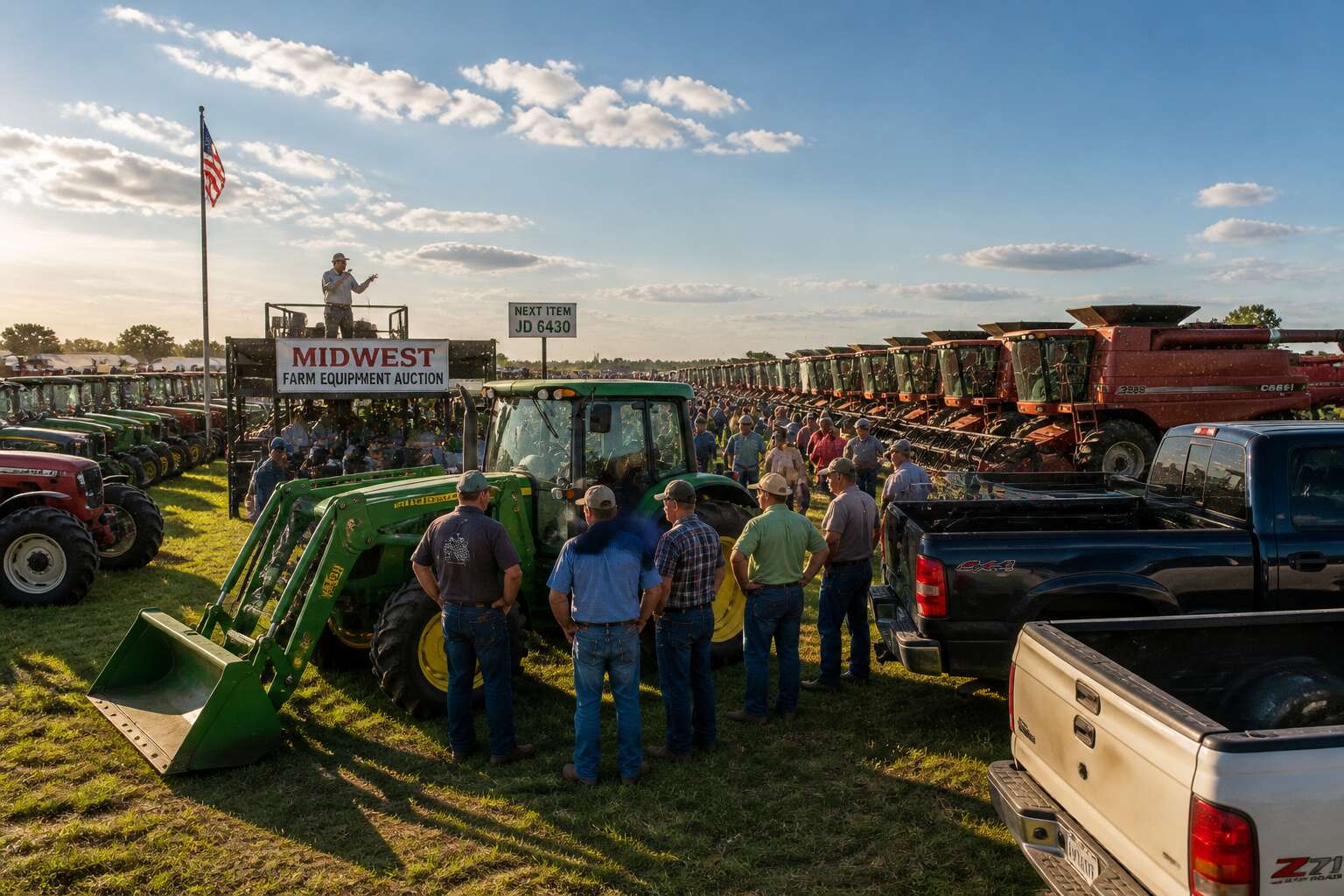
Key Advantages of Buying Farm Machinery at Local Auctions
Lower Price Points Compared to Retail Dealerships
Your wallet deserves a break, and local auction houses deliver. Retail dealerships price machinery with a handsome markup for showroom floors and sales commissions. Auctions strip those layers away. Bidders set the price based on what the machine is worth, not what the dealer hopes to earn. You can walk away with a solid tractor for a fraction of the dealership quote.
Consider the cost breakdown:
- No showroom overhead
- No extended warranty upselling
- No pressure tactics from sales staff
I have seen implements sell for 40 percent below market value at used farm equipment auctions near me. The bidding dynamics reward patience and research, not negotiation skills. Dealers rely on financing margins and add-ons. Auctions move iron. That difference shows up directly in your bank balance.
Opportunity to Inspect and Compare Multiple Machines Simultaneously
At a local auction, you can stand between two combines and compare their wear side by side. That hands-on access is something no online listing can offer. You can run your hand along a hitch, check hydraulic fluid levels, and listen to an engine idle. You might even bring a mechanic or a trusted friend to help you look for stress fractures that photos hide.
- PTO shaft alignment
- Tire tread depth
- Weld integrity on loader buckets
I have found that a morning of walking rows of implements at used farm equipment auctions near me teaches more than a week of research online. You see which machines have been cared for and which have only been patched. That clarity is worth the drive.
Locating Upcoming Farm Equipment Auctions in Your Region
Regional Auction Listing Websites and Mobile Apps
The online landscape has changed how farmers locate sales. Regional auction listing websites aggregate announcements from trusted auctioneers across South Africa, saving hours of driving between towns. Mobile apps compliment these sites by pushing alerts straight to your phone, often before paper notices arrive. Searching used farm equipment auctions near me now returns curated results with dates, locations, and catalogue previews.
Useful features to look for in a platform:
– Province-specific filters
– Lot photos and condition reports
– Automatic bid reminders
Some apps even allow remote bidding, which helps when a sale falls on the same day as planting. Bookmark the portals that serve your region, set your alerts, and let the next auction find you.
Agricultural Newspapers, Magazines, and Rural Newsletters
Every Wednesday, my neighbour phones at six to read the auction notices from the farming weekly. He has never missed a sale that mattered! The printed word carries a specific authority in rural South Africa, one that online portals still lack. Agricultural newspapers and rural newsletters publish auction calendars weeks ahead of digital listings, and their editors add local context that turns a plain announcement into a practical decision.
I read the classifieds before the headlines. The most reliable used farm equipment auctions near me often appear first in these pages, sometimes with a previous reader’s pencil marks still visible. Magazines take a longer view, offering quarterly market analysis and dealer stock summaries that help you interpret prices before you bid.
- Provincial agricultural magazines
- Farmers’ association newsletters
- Weekly farming newspapers with classified sections
The print world moves slowly, but that is precisely its strength. It gives you time to plan a route and a budget.
Networking Through Local Farm Bureaus, Co-ops, and Extension Offices
My surest way to locate used farm equipment auctions near me is to let other farmers do the scouting. At the co-op counter, over diesel fumes and packed shelves, someone always knows which auctioneer is setting up next weekend.
Local farm bureaus keep a working pulse on upcoming sales. Extension officers hear about dispersal auctions before any advert appears. Ask them directly. Join the conversation.
I have driven to sales in the Free State and Karoo purely because a neighbour mentioned it at a monthly gathering. The local network outperforms every algorithm.
The sources I trust most:
- Co-op notice boards and staff
- Farm bureau meetings
- Extension office circulars
That is how machinery changes hands quietly, between people who know each other’s land.
Online Auction Platforms Offering Local Pickup and Preview Days
Online platforms have shifted the marketplace, yet serious buyers still want a physical look. Many portals list used farm equipment auctions near me with preview days attached, where the auctioneer opens the shed for a few hours before bidding closes. You walk around a tractor, check the oil, listen to the hydraulics whine, then submit your offer from your bakkie.
Local pickup makes these sales practical. The auction house holds the item at a depot or on-farm site, avoiding long haulage costs. Some sites arrange dispatch to nearby collection points.
- Preview days reveal reconditioned parts that photographs miss
- Local pickup reduces transport risk and cost
- Online bidding stays live until the hammer falls
People who search for used farm equipment auctions near me often want both reach and reassurance. This hybrid model gives them that.
Direct Inquiries with Equipment Dealers for Scheduled Consignment Sales
They hold a list that no website publishes. I learned this after asking a dealer in KwaZulu-Natal about his upcoming sales. Direct inquiries with equipment dealers for scheduled consignment sales uncover dates and lots before any advert appears. The dealership yard becomes a staging ground where combines and planters from several farms wait for the hammer.
Here is how to work that channel:
- Request to be added to the dealer’s broadcast list.
- Ask about consignment intake during quiet midweek hours.
- Follow up after each sale for items that failed to meet reserve.
Each conversation feeds the next. The dealer remembers your name and your machinery needs. Over time, you become a first-call buyer. That is how you surface the used farm equipment auctions near me that stay unadvertised, sitting in plain sight behind a showroom door.
Preparing for Auction Day: Research and Machine Inspection
Determining Fair Market Value Using Price Guides and Comparables
The morning of an auction moves quickly. I have watched seasoned farmers inspect a tractor’s undercarriage while newcomers scroll through their phones, unsure where to begin. Preparation separates those who leave with a bargain from those who leave with a headache.
Start by studying the auction catalogue days beforehand. Note each lot number and cross-reference specifications. When you arrive, bring a notebook, a flashlight, and a small magnet to check for body filler. These physical checks matter more than any photograph:
– Run your fingers along hydraulic lines for cracks
– Listen for irregular engine idling
– Check tire wear patterns for alignment issues
For fair market value, consult price guides such as the Official Guide to Farm Equipment Values. Compare sold prices from recent regional sales, not asking prices at dealerships. If you search for used farm equipment auctions near me, you will notice that hammer prices vary by province and season. In the Free State, a baler might sell for a different sum than the same model in the Western Cape.
Checking Engine Hours, Maintenance Logs, and Overall Condition
A clean exterior can hide a multitude of sins. I have seen tractors with gleaming paint conceal a transmission that groaned like a wounded animal. The real story of any machine lives in its operational data and service history. When you search for used farm equipment auctions near me, you are not just buying metal and rubber. You are inheriting the previous owner’s maintenance habits, for better or worse.
Engine hours are a starting point, not the final verdict. A machine with 5,000 hours that has been meticulously serviced will often outlast a 2,000 hour model that was neglected. Dig into the maintenance logs if they are available. Look for consistent oil changes and recorded repairs. In the Highveld dust, an air filter that was changed on schedule matters more than a perfect fender. Irregular service intervals should raise a red flag.
The physical inspection is where you separate machinery from scrap. You need to get your hands dirty to assess the true condition:
– Operate every lever and switch to check for stiffness or play
– Examine the radiator for bent fins and corrosion
– Look for signs of recent welding or painting that might cover fatigue cracks
The hammer price at any auction is a product of what buyers see in that moment. The ones who know the real value have already checked the hourly usage records and service receipts. Tyres can be replaced, but a tired engine block is a permanent burden. Preparation on paper and a thorough physical check will always beat impulse bidding on a shiny paint job.
Identifying Signs of Wear, Structural Damage, or Prior Repairs
The price of preparation is often lower than the cost of a mistake. While online previews offer a convenient first look, they can leave you blind to the finer details that only reveal themselves in person. Your search for used farm equipment auctions near me should include a dedicated block of time for a physical walk-around before the gavel falls.
– Check for hydraulic fluid leaks around the cylinders and hose connections.
– Operate the controls to feel for smooth movement versus catches or grinding.
– Inspect the cutting edges and tines for wear patterns that affect performance.
– Look at the condition of the bucket pins and bushings; slack here indicates heavy wear.
Structural damage is a different beast entirely. Bring a small hammer to tap on cast iron and steel components. A sharp ring indicates solid metal, while a dull thud sounds like a repair. Look for weld seams that are too neat and tidy, they often hide a cracked frame. Crushed roll bars or a bent drawbar point to an overturn or a heavy impact. The value of a loader is not just in its bucket, but in the integrity of its boom arms. Scrutinize the stress points where components meet. A coating of fresh grease can mask a sloppy joint that will fail under load. The true cost of a machine is what you spend to make it ready for work, not just the final bid on the auction block.
Smart Bidding Strategies and Post-Sale Logistics
Setting a Firm Budget and Resisting Bid Fever
When the auctioneer calls for the first bid, your strategy determines whether you drive home triumphantly or with an empty trailer. Smart bidding begins before the lot opens, with a firm budget rooted in your own valuation, not the auctioneer’s rhythm. I have seen buyers get swept away by the pace, so set a ceiling and stick to it. Resisting bid fever means stepping back when adrenaline surges.
Post-sale logistics demand equal attention. After winning a lot, you must arrange payment, loading, and transport promptly. Many auction houses charge storage fees if you delay. A practical checklist helps:
– Confirm payment methods and deadlines with the clerk
– Inspect your machine once more before loading
– Book haulage with a licensed carrier for oversize loads
For used farm equipment auctions near me, successful bidders treat the entire process, from paddock to farm gate, as one continuous transaction.
Recognizing Bidding Patterns and Strategic Increments
The auctioneer once told me, “The bidder who knows his number never loses.” That wisdom applies directly to used farm equipment auctions near me. Recognizing bidding patterns is about reading hesitation. A bidder who waits three seconds after each call is likely near their limit.
Strategic increments, such as raising by the smallest allowable step, can expose that limit without revealing your own. In one sale, I watched a buyer lose a tractor by jumping R1,000 when a R100 increment would have broken the other bidder’s nerve. The auctioneer’s cadence also matters. A rapid response often signals a prepared buyer, while a long pause invites the auctioneer to push the price higher.
After the hammer falls, post-sale logistics require the same attention. Payment windows and loading slots shrink quickly, and a delayed pickup at used farm equipment auctions near me can incur storage fees that erode your savings.
Deposit Requirements, Payment Methods, and Settlement Timelines
Deposit requirements expose your character as much as your budget. At used farm equipment auctions near me, a 10% deposit is standard, but a few venues ask for 50% on the spot. I once saw a buyer fumble for a cheque book while the auctioneer waited with theatrical patience. Your reputation follows you, so bring a bank card or prearranged electronic transfer.
Payment methods shape your timeline. Settle within 24 to 72 hours, depending on the auction house, and the clock starts at the hammer fall. Storage fees begin immediately, punishing the unprepared.
- Bank transfer: confirm your daily limit before bidding
- Cash: accepted but risky to carry in large sums
- Credit card: often capped at R50,000 per transaction
Inspect the settlement policy in the catalogue, not at the counter. A prompt payment unlocks your machinery, while delays cost you twice.
Arranging Transportation and On-Site Loading Logistics
Smart bidding means interpreting body language during the lot. At used farm equipment auctions near me, I watch for the hesitant nod, the quick glance at a partner. Those micro-signals inform the next increment. Set a mental ceiling before the auctioneer calls your lot, then subtract ten percent for emotional markup.
Once the hammer falls, your focus shifts to logistics. Transportation costs can exceed the purchase price for heavy implements, so arrange haulage before you bid. On-site loading demands specific equipment: chains, slings, and a tractor to move items onto a trailer. Some venues offer forklifts for a fee.
- Confirm the auction house’s loading assistance policy
- Hire a transport company with agricultural flatbeds
- Measure dimensions against your trailer’s capacity
Failure to plan here turns a bargain into a liability. The clock starts at settlement, and storage fees erase savings quickly.
Completing Title Transfers, Bills of Sale, and Registration Paperwork
Smart bidding ends when the auctioneer’s chant fades. The real work begins with paperwork. At used farm equipment auctions near me, the gavel’s fall binds you to settlement terms, yet the title transfer remains your responsibility. A bill of sale without a proper VIN or serial number creates problems for registration later.
Gather these documents before you leave the grounds:
- Signed bill of sale with both parties’ details
- Original title or notarized proof of ownership
- Registration forms for your province’s agricultural vehicle office
The auction house handles payment, but you handle the transfer. Confirm the seller’s signature matches the title exactly. Errors here stall registration and can leave equipment impounded during transit. Treat the paperwork with the same discipline as the bidding itself.

0 Comments