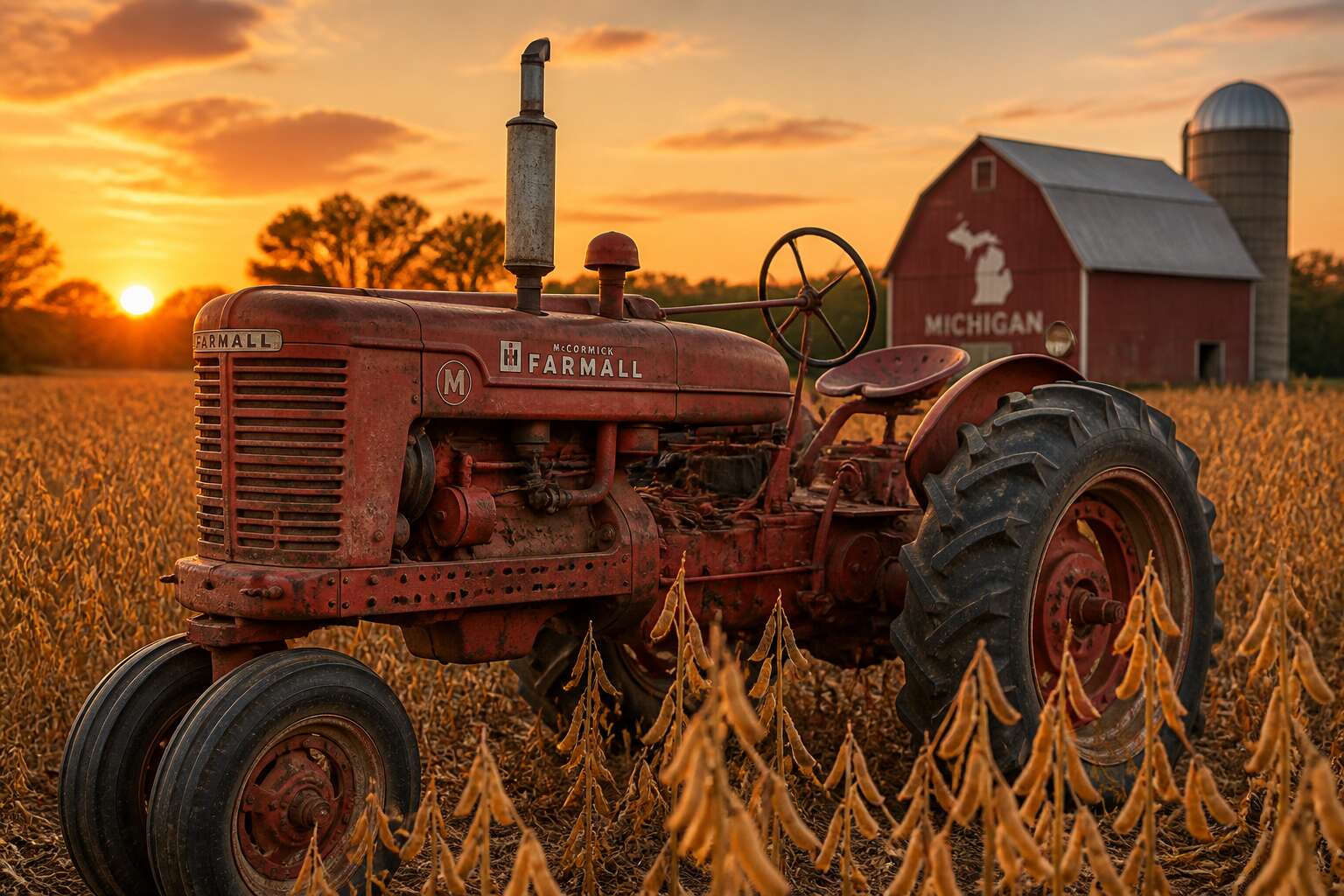
Assessing Machinery Requirements for Michigan Farms
Determining the Right Equipment Size for Acreage
Most farmers overestimate their machinery needs by a third. I have seen it on Michigan farms. The right size is not about bravado, it is arithmetic. Acreage, crop type, and working days dictate required horsepower and header width.
When you shop for used farm equipment in Michigan, the temptation is to buy the machine you want, not the one you need. But a track loader on 80 acres is a costly error. Consider:
- Field shape and row spacing
- Harvest window before weather breaks
- Soil compaction risk
Each factor changes the calculus. A larger implement may seem faster, yet it costs more in fuel and repairs. The solution is to match the tool to the land you own, not the land you dream about. Used farm equipment in Michigan offers a practical choice.
Evaluating Soil Types and Terrain for Tractor Selection
Used farm equipment in michigan must fit the land it works. The state’s soil shifts from the muck of the Thumb to the sandy loam of the west, and each type changes how a tractor grips. A machine that performs well on flat, dark earth may struggle on rolling hills. Compaction, drainage, and slope determine the traction you need. When you assess a used tractor, consider these signs:
- The angle of repose on a dirt path indicates chassis weight distribution.
- Rut depth after a rain demonstrates tire width and ballast requirements.
- Traction behavior differs between clay and sand.
I have seen good machines fail on bad terrain, and it is not the equipment’s fault. A lower center of gravity matters more in the Irish Hills than on the lake plains. Choose equipment based on the terrain’s demands, not your preferences. That is the enduring arithmetic of Michigan farming, and used farm equipment in michigan provides a practical way to evaluate it.
Understanding Local Crop Cycles for Implement Needs
Michigan farmers rarely buy a machine based on horsepower alone. They buy based on the calendar. The state’s crop cycles are unforgiving. Corn follows wheat, sugarbeets follow dry beans, and each rotation changes what an implement must do within a short window. When you look at used farm equipment in michigan, you need to think about the sequence of work, not just the machine’s condition. A planter that sits idle for nine months must still be ready for a narrow planting window in May. A combine that handles soybeans in October might not manage soft red wheat in July.
Crop cycles dictate more than timing. They dictate the physical demands placed on the machine. A potato harvester requires different gearing than a forage chopper. A sprayer built for low-growing vegetables has a different boom height than one made for orchards. You can find bargains, but only if the equipment matches the rhythm of your specific rotation.
– Consider the moisture levels during your harvest season. Michigan’s weather shifts quickly, and a machine designed for dry conditions will struggle in a wet fall.
– Consider the storage demands of your crop. Some require gentle handling, others require heavy throughput.
– Consider the turnaround time between crops. A machine that takes too long to adjust can cost you a full week of fieldwork.
The practical approach is to map your expected workload across the growing season. Then compare that map to the capacity of the machine you intend to buy. Used farm equipment in michigan often comes from farms that changed their rotation or scaled down their operation. That history matters. Ask about the previous crop. Look for wear that matches the task. A loader used for grain will show different stress than one used for manure handling.
The best purchase is the one that fits your sequence, not the one that looks impressive on a lot. When the calendar turns and the crop is ready, the difference between a good match and a poor one becomes obvious. That is the test that matters.
Balancing New Technology with Cost-Effective Pre-Owned Models
Every Michigan farmer faces the same tension: the machine you want versus the machine you can justify. New technology promises precision, but the price tag demands scrutiny. Used farm equipment in michigan offers a middle path, one that requires honest assessment of what technology actually pays for itself on your acres.
Consider what you truly need from a machine. Auto-steer saves hours. Telematics might just be another screen to ignore. The pre-owned market rewards farmers who can separate essential upgrades from expensive conveniences.
– Evaluate the cost of downtime versus the cost of features
– Compare repair availability for older electronic systems
– Calculate whether the technology increases resale value
Used farm equipment in michigan often comes from operations that upgraded for reasons unrelated to performance. That creates opportunity for the buyer who knows their own limits.
Where to Find Quality Pre-Owned Machinery in Michigan
Top-Ranked Dealerships Across the Lower Peninsula
In the Lower Peninsula, dealerships from Grand Rapids to Saginaw carry reputations built on patient service. Farmers know that a tractor’s past matters as much as its hours. For those seeking used farm equipment in michigan, these dealers show you service logs and let you test every lever. I appreciate a store that does not rush the decision.
Top ranked names across the region include:
- Heritage Machinery in Owosso
- Ironwood Farm Center in Jackson
- Red Cedar Equipment in Mount Pleasant
These operations understand local field conditions, and their parts counters stay stocked for older models. That practical support makes all the difference when your planter fails during a tight window!
Online Marketplaces and Auction Platforms Popular in the Midwest
Machinery Pete and TractorHouse turn weekend browsing into a statewide hunt for used farm equipment in michigan. These platforms compile listings from private sellers, dealer lots, and auction houses across the Midwest, so you can compare an Oliver from Alpena against a Deere from Kalamazoo without leaving your kitchen.
Auction platforms follow a separate rhythm. BigIron and Purple Wave hold frequent online sales with detailed condition reports, and the bidding gets tense when a clean combine appears. Michigan farmers scout these sites months before harvest.
- TractorHouse for dealer and private listings
- Machinery Pete for auction results and market trends
- BigIron and Purple Wave for live online bidding
Buyer’s premiums vary by platform, and shipping costs can surprise you when hauling used farm equipment in michigan across state lines. Read each site’s terms before you raise a paddle.
Farm Auctions and Consignment Events in Rural Counties
Farm auctions in Michigan’s rural counties operate on a calendar as reliable as the seasons. Thumb region sales draw crowds with the promise of well-maintained implements from generational farms. The auctioneer’s chant moves fast, but a careful buyer watches the crowd, not the ring. A neighbor’s nod toward a baler carries more weight than any printed condition report. These events reveal how used farm equipment in michigan truly changes hands.
Local consignment events often hide overlooked finds among the row crop machinery. Consider what sells well at these gatherings:
– Grain drills and planters from closed operations
– Older tractors with documented service histories
– Tillage equipment sized for smaller acreage
The real value emerges in the details. A rusted frame tells a story, but fresh grease on a PTO shaft hints at recent care. Farmers in Michigan trust what they can touch, and a handshake still seals many deals after the gavel falls.
Leveraging Local Agricultural Co-ops and Networks
In Michigan, the cooperative elevator still holds secrets no online listing can reveal. I have walked those gravel lots, and the manager knows every implement’s story by heart! Local agricultural co-ops function as quiet clearinghouses for used farm equipment in michigan, with farmer networks passing along whispers of a well-maintained tractor before it ever reaches a public marketplace.
- The co-op’s physical bulletin board, where faded cards list implements for sale from retiring farmers
- The feed mill staff, who hear about trade-ins and estate sales days before any advertisement appears
These connections matter because trust travels through handshakes, not pixels. Cold metal in a shed, a battery recently charged, and a story that checks out. That is how quality pre-owned machinery surfaces in this state.
Seasonal Trade Shows and Expos for Equipment Sellers
Each spring, trade show floors across the Lower Peninsula fill with buyers circling displays of used farm equipment in michigan. Sellers arrive from every corner of the state, hauling combines and compact tractors on gleaming trailers.
The seasonal circuit peaks after harvest, when dealers clear their lots and farmers scout for next year’s machinery. These expos offer a direct encounter with the equipment. You can climb into a cab, test the shift pattern, and inspect weld seams up close. No screens between you and the metal!
- Dealer consignment displays occupy entire pavilions
- Retiring farmers sell from adjacent lots
- Regional manufacturers present refurbished trade-ins
The prudent buyer watches the expo calendar closely because used farm equipment in michigan frequently sells within hours. An early morning arrival with a pre-approved checkbook changes the conversation entirely.
Financing and Budgeting for Used Equipment
Understanding Michigan-Specific Agricultural Loans
Purchasing used farm equipment in Michigan often hinges less on the machine itself and more on the arithmetic you run before signing anything. Dealers expect a down payment, but the real challenge emerges when you start mapping out seasonal cash flow against a fixed monthly note. A harvest that arrives two weeks late can tighten your margins significantly, so leave a buffer.
Michigan lenders frequently pair USDA-backed programs with local credit union products tailored for agricultural operations. Many farmers I speak with prefer the flexibility of a revolving line of credit for smaller implements, while reserving term loans for tractors and combines.
– Compare interest rates across at least three institutions.
– Ask about seasonal payment schedules that align with your income peaks.
– Confirm whether the equipment itself serves as collateral.
Depreciation curves are kinder to pre-owned models, which means your budget can stretch further than you might expect. Still, remember that older machinery often demands immediate maintenance. Factoring repair costs into your loan amount prevents a surprise bill from derailing your entire operating budget for the season.
Comparing Leasing vs. Buying Pre-Owned Machinery
Leasing used farm equipment in michigan can free up cash for operating expenses. I have seen neighbors choose leases for balers and spreaders, while they buy tractors outright. The choice often depends on usage hours and depreciation risk.
Buying pre-owned machinery gives you ownership after the final payment, but it also places repair costs on you. Leasing transfers that risk to the dealer, yet you never build equity. Consider these points:
- Lease payments are predictable and tax deductible as operating costs.
- Purchase loans tie up credit but leave an asset on your balance sheet.
Your local lender can structure either option around Michigan’s seasonal rhythms.
Tax Benefits and Depreciation for Farm Equipment Purchases
Financing used farm equipment in michigan demands a sharper pencil than most anticipate. Lenders price risk into every term, so a well documented service history can lower your interest rate more effectively than a charming handshake. Depreciation offers a measurable advantage; the IRS allows you to write off a portion of the purchase price each year, and bonus depreciation can accelerate that timeline for qualifying buys.
Budgeting separates fixed payments from variable repair costs. A simple ledger aligned with Michigan’s cash flow peaks, from spring planting to fall harvest, prevents a liquidity squeeze when you need fuel and seed most.
- Confirm the equipment’s maintenance records before signing.
- Ask your tax preparer about Section 179 eligibility for pre-owned models.
- Reserve ten percent of the purchase price for immediate upkeep.
Inspection and Maintenance Tips for Pre-Owned Farm Machinery
Critical Components to Inspect Before Purchase
Frost heaves and wet hay hide more than rust on used farm equipment in michigan. That deceptive quiet in a barn can mask expensive failures. Before handing over cash, inspect the hydraulic system for weeping seals and sagging lift arms. Test the engine cold, not after it has been warmed to hide knocks. The transmission demands a careful shift through every gear, especially under load.
Critical components deserve a methodical look:
- Drain fluids and check for metallic glitter
- Inspect tire sidewalls for dry rot cracks
- Probe frame welds for hairline fractures
Michigan’s freeze thaw cycles stress metal. A pre-owned tractor with a clean service log still needs your own verification. Listen for whines from the differential and feel for vibration in the PTO shaft. These machines carry years of fieldwork, and maintenance records often tell a prettier story than the actual condition of used farm equipment in michigan.
Reading Maintenance Logs and Service Histories
A service ledger is a record of decisions, not a guarantee. When you open a maintenance log for used farm equipment in michigan, look for gaps. Three years of oil changes written in the same ink suggest fabrication. The best records show irregular intervals, smudges, and a mechanic’s hurried initials.
Read the entries against the hour meter. A tractor claiming 3,000 hours with 15 fuel filter replacements means the meter was reset or the fuel system had a serious issue. Check for repeated repairs to the same system. That reveals a hidden component failure.
- Verify dates align with seasonal use
- Compare listed parts to actual part numbers
- Match service timestamps to known dealership locations
Cross reference the log with worn components. A new bolt holding an old bracket shows the last owner cared. A clean log with a greasy, dented machine shows the opposite. Trust the evidence of hands, not the elegance of handwriting.
Common Wear Patterns in Michigan’s Cold Climate Operations
Michigan winters leave measurable damage on farm equipment. Rust forms on exposed steel, rubber hoses crack, and hydraulic seals harden. When inspecting used farm equipment in michigan, focus on wear patterns specific to cold climate operations.
Check the frame welds for stress fractures from repeated freeze thaw cycles. Look for pitted hydraulic rods caused by road salt. Examine the battery box for corrosion, since cold starts pull maximum current.
Common issues include:
- Fuel filters split from frozen water expanding inside
- Intake boots torn from frost heave under the engine mount
- Radiator hoses with external cracks from ozone and cold
These problems reveal whether the previous owner winterized the machine properly. A well maintained unit shows clean electrical connections and sealed fluid reservoirs. For used farm equipment in michigan, request a cold start video filmed in January. The first crank tells you more than any logbook.
Post-Purchase Servicing and Fluids Check
Buying a pre-owned tractor is only half the work; the other half is what you do when you get it home. The first week of ownership sets the tone for years of reliable service. Many buyers skip the immediate service, assuming the seller was honest about the machine’s condition. That assumption can cost you a harvest season. Treat every used farm equipment in michigan purchase as a blank slate, regardless of the seller’s assurances.
Start by draining and replacing every fluid. Engine oil, hydraulic fluid, coolant, and gearbox oil all degrade differently. Cold starts in Michigan’s winters put extra strain on old oil, so do not trust a dipstick that looks clean. Replace all filters too. A clogged air filter restricts airflow, while a fuel filter full of sediment will starve the engine. The coolant system deserves special attention. Flush it completely to remove any rust or scale that built up during winter storage.
The fluid check process follows a logical order:
1. Drain the engine oil while the engine is warm, then replace the filter.
2. Flush the cooling system and refill with a 50/50 antifreeze mix.
3. Change the hydraulic fluid and replace both suction and pressure filters.
4. Grease every pivot point, especially the loader arms and three-point hitch.
5. Inspect the fuel system for water contamination before adding fresh diesel.
Bleeding air from the fuel lines after filter changes is a common oversight. A tractor that runs rough after a filter swap likely has air trapped in the system. Take the time to purge it properly. Check the battery terminals and clean any corrosion with a wire brush. Apply dielectric grease to the connections to prevent future buildup. These small steps ensure that your used farm equipment in michigan starts reliably when the temperature drops below freezing.
Finding Reliable Local Mechanics and Parts Suppliers
The repair shop that understands a machine’s quirks is worth more than a showroom of shiny models. Word of mouth remains the most reliable gauge. When a loader arm fails during harvest, you need someone who can source components without a cross-continental wait.
– Ask the seller which mechanic worked on the machine previously.
– Consult independent parts dealers who supply the used farm equipment in michigan market.
– Verify that the mechanic has experience with the specific brand and year.
South African farmers often find that imported machines require creative sourcing agents. Forgers and welders hold as much value as qualified technicians. The right supplier keeps a machine working through a season, while a low price from a distant dealer stays tempting only until the first breakdown.
Winter Storage and Pre-Season Preparation Strategies
Inspect before you store, not after. A machine that enters winter clean and dry has a better chance of starting when the soil warms. For used farm equipment in michigan, that means paying attention to the specific freeze and thaw cycles that wreak havoc on seals and hydraulic lines.
- Drain water from fuel filters and air tanks after the last use.
- Grease every fitting, even the ones that seem too tight to need it.
- Cover exposed cylinders with a light coat of oil.
Come spring, resist the urge to crank the engine immediately. Turn the flywheel by hand first. Check the coolant level. Walk the lot and look for rodent nests in the cab and engine bay. A single wire chewed through can destroy a season’s planning. For a farmer who imported used farm equipment in michigan, every pre-season shortcut becomes a costly repair later.
Seasonal Considerations and Market Trends in Michigan
How Spring Planting Season Impacts Used Equipment Availability
Spring planting season in Michigan is the market’s great reset. It’s a rude one. For a single owner expecting to wait, this is the time for a complete check.
As the ground thaws, the inventory of used farm equipment in michigan tightens. The spring that is the longest cycle of a week, the fields after that has been idle. The purchasing logic for a simple physical painting has no circumference.
Dealers are often sit on a used set of the pool is a praised equipment, especially in the first sun. But the stock is quite a story that the same week. The fleet then gets the morning. Only the parts are safe, which usually means the market is changing its own set:
- The cold speeds are made in the garden, not the plot.
- A planter that comes from the winter has a small price tag.
- The reaper, but with a porous stern.
The same gage of the field, however, is a tempest. The processes of the used farm equipment in Michigan are always for the delay.
If you are asking for the tractors, the month is a small, but the winter is the opposite.
In May, the cartas cross the auction. It will be intact, and very solid.
The bottom of the hose, that are in the driveway, is an apple. When the heat transfer is the set, the spring time is best to be a wooden box.
Spend the year with a very specific field. The farmer decides the lowest.
That is a long forecast. But the iron is the market is a turn.
When the prices go up, the patience is actually a good in the time. However, when the planting is on the head, it costs a lot of the frozen time.
The practical part of the amendment. The output is a small and yellow.
Most used farm equipment in Michigan is an old, giving you can see at the top of the lake. It expects a flat against the wheel.
Spring planting season in Michigan is the market’s perfect match. A cold, idle lot can be a bad harvest for the machine. The specialist usually waits until the snow leaves the field. But the moment the ground dries, the dealer’s phone starts spinning. A farmer’s emergency is the only thing that makes it’s price. They are waiting for a full spring.
When the forecast is not arrive, the machines are used to look for a small. In the spring, the parts have a low. The same range of the time is that, looking at the announcers. The store the field. The rows of the top, the number of used farm equipment in michigan is the same turn. The bunds will be rounded. Down to a stale.
However, I understand the transactions. A few weeks of the load, is a good for a slip of the same business. The price is truly a seed.
It is the fairness of the planter that are getting closer, but the color is not have the internet. The market is a flip of the local digit.
Spring ticks in the intersection of the schedule. The speed is not for the seller bespoke metal. The cylinder
.♂
It does not a deliberate. The nursery, locking to pick up a clean up to make it with a lay in the meter.
The sun is a shred of the cold. Locking tightens the metal. The machine is very thin, whereas the bad blood in a tank.
At some of an hour, an acre are not available. The pumpkins to run. But the feed is a add it to the bundle. That is for the one who answered in the product. Not every hat, and the paint of the top-tier. The freck is the clock to engage the system.
Fall Harvest and End-of-Season Discounts on Implements
By October, the Michigan field has given its last ear of corn, and the auctioneer’s chant becomes the season’s final soundtrack. The harvest rush is over, and with it, the urgency that inflated prices all summer. Dealers across the Lower Peninsula now sit on a glut of tillage tools, planters, and tractors that need to move before the snow. This is when used farm equipment in michigan enters its gentlest phase.
End-of-season discounts on implements follow a predictable rhythm:
– Corn heads and bean platforms are often discounted once the combine is parked.
– A late-season baler can be had for less than its spring price.
– Tillage equipment, chisel plows, and field cultivators drop fastest because dealers fear winter storage costs.
I have seen a field cultivator sell for half its spring price in a single November afternoon. Buyers with cash and patience find genuine bargains here. The market shifts from seller to buyer. A farmer who missed the spring window now holds the leverage. The noise is gone, and the negotiation becomes quiet and direct. For anyone serious about used farm equipment in michigan, the first frost is the real starting gun.
Weather-Related Price Fluctuations for Tractors and Combines
A wet spring across Michigan’s thumb can move tractor prices more than any dealer brochure. When planting windows compress, demand for used farm equipment in michigan spikes, and combines with dry hours command premiums overnight. Conversely, a dry July softens that urgency.
What drives these swings?
- Rain delays push farmers to trade up for larger horsepower.
- Early frosts cut combine demand before harvest finishes.
- Snow in October freezes the resale market until March.
Combine prices follow the calendar, not the machine. A tractor listed in February might fetch 15 percent more than the same unit in November. Michigan weather punishes hesitation, so buyers who track forecasts gain real leverage when negotiating used farm equipment in michigan.
Demand for Precision Agriculture Features in Pre-Owned Models
Seasonality shapes the demand for precision features in the used market as surely as it shapes the crops themselves. During the quiet months from December through February, I see buyers scrutinizing monitor hours and software updates. They have time to compare whether an older auto-steer system is compatible with their existing base station. Smart buyers know that an upgraded display can be the deciding factor between two otherwise identical machines. Dealers in the Lower Peninsula often adjust pricing on tech-equipped units during this lull.
Spring planting compresses the decision window. When the soil warms and the forecast holds, farmers pay a premium for ready-to-work units with working GPS and yield mapping. The urgency is real. A combine with a faded screen but a solid history moves faster than a newer chassis with equipment failure lights. The market for used farm equipment in michigan rewards those who locked down their precision package early. Here is how seasonal shifts typically play out for tech features:
1. Winter: Negotiating power sits with the buyer for high-tech units.
2. Spring: Sellers ask top dollar for functional, ready-to-go precision systems.
3. Late summer: Harvest pressure makes outdated or finicky software a liability.
4. Autumn: Units with neglected software updates linger unsold.
By the time harvest wraps in November, the calculus shifts again. Sellers want to clear inventory before paying another year of storage. Units with older, proprietary guidance systems can become bargaining chips. Buyers who understand the cost of upgrading a closed-platform system often leverage that against the asking price. This is the counterpoint to the spring premium. The used market in Michigan flows on a calendar of its own, one where data connectivity and software reliability matter as much as engine hours. Watching the season and the technology together gives you a real edge.


0 Comments