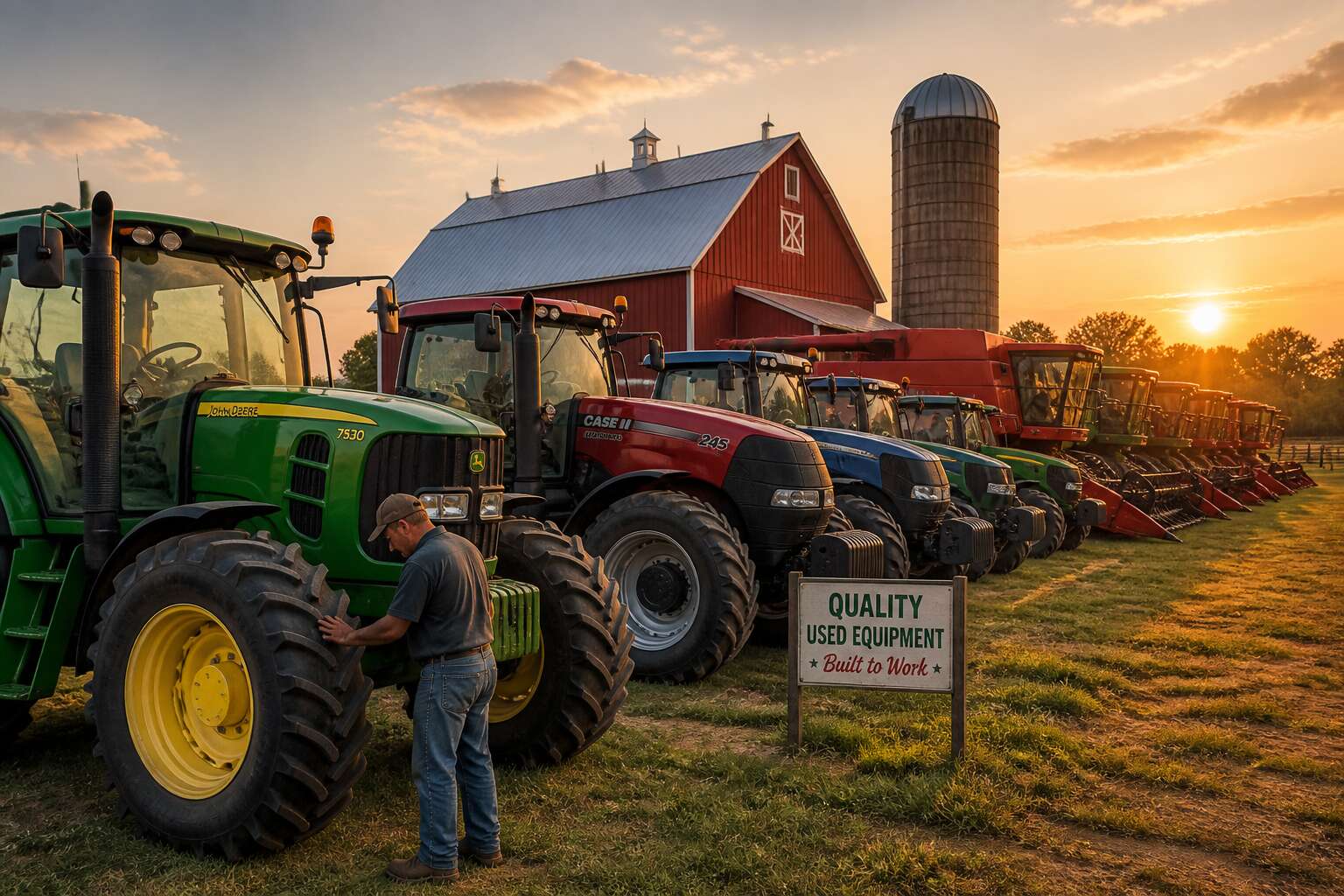
Evaluating Online Marketplaces for Pre-Owned Agricultural Machinery
Reputation and Track Record
When you browse used farm equipment sites, the seller’s reputation matters as much as the machine’s hours. A site with a decade of consistent trading and verified buyer feedback signals reliability, while anonymous listings often mask hidden defects. Look for platforms that publish transaction histories and respond to disputes transparently.
Consider these credibility markers:
- verified physical business addresses
- third party review integration
- public response to negative complaints
In South Africa’s agricultural sector, where equipment moves between provinces, a track record of successful deals reduces risk substantially. Pre-owned machinery purchases carry enough uncertainty without adding an unaccountable intermediary to the equation. Prioritise platforms that demonstrate accountability through concrete records, not vague promises.
User Interface and Search Filters
Anyone who has hunted for a specific tractor model knows the frustration of a clunky interface. I have spent entire afternoons clicking through irrelevant ads, which matters when your day already starts before sunrise. The most efficient used farm equipment sites let you narrow results by province, brand, model year, hours, and price range in a single click.
- Saved searches with email alerts for new listings
- Map based browsing to locate machinery near your region
- Sort options for price, age, and hours
Some marketplaces still make you type a keyword and hope for the best. The worst used farm equipment sites hide their filters behind registration walls or force you through endless category clicks. They waste your time and test your patience. When evaluating online marketplaces for pre-owned agricultural machinery, consider how quickly the interface responds to your needs. A search function that lets you combine multiple criteria at once signals a platform built for serious buyers, not casual browsers. That distinction becomes obvious within the first minute of use!
Fee Structures and Listing Costs
Money moves before the machine does. Most buyers assume the asking price tells the whole story, but used farm equipment sites hide their actual cost in the terms. Some charge a flat fee per listing. Others take a commission from the final sale. A handful ask for monthly subscriptions to unlock basic features like contact details or photo uploads.
In South Africa, where transport quotes can exceed a repair bill, these charges change the equation! I have watched a bargain tractor turn into a loss once the platform took its cut.
What does the fee actually cover?
- Placement in regional searches or national listings
- Access to serious buyers or casual browsers
- Support when the deal sours
The clearest used farm equipment sites show these costs before you register. The rest reveal them only when you try to leave.
Geographical Coverage and Shipping Options
From the KwaZulu-Natal coast to the Northern Cape, distance changes every deal. A combine in Mpumalanga might look perfect on screen, but the transport quote could match the machine’s price. Used farm equipment sites handle this differently. Some filter by province or delivery radius.
In my experience, shipping arrangements differ widely. Some platforms connect buyers directly with transport brokers. Others leave the arrangement to you and the seller, with no guidance. A few quote freight at checkout, which is rare and valuable.
- Check whether the site shows the equipment’s physical location
- Confirm if the seller handles loading or expects you to arrange it
- Ask about cross-border delivery if you are near a border
Coverage matters for inspection too. A machine three provinces away may be cheaper, but you may never view it in person. Platforms that display delivery timelines and costs before you commit prevent a costly surprise.
Essential Equipment Categories to Search For
Tractors and Loaders
Finding the right machine starts with knowing precisely what your operation needs. Tractors form the backbone of most farms, so their condition dictates your productivity. Hours on the engine mean more than the year of manufacture, but you must also inspect the transmission and hydraulic system. A neglected power take-off can stop a planting season dead in its tracks.
Loaders are the workhorses for material handling, from feed to manure. Look beyond the bucket’s paint and check the pins, bushings, and cylinder seals for wear. These components are expensive to replace, and their condition reveals the previous owner’s maintenance habits. For those starting their search on used farm equipment sites, understanding these mechanical checkpoints is vital for avoiding costly mistakes.
When you compare machines, prioritize these factors:
– Service history and documented maintenance logs.
– Overall engine hours and idle time.
– Condition of tires or tracks.
– Evidence of structural repairs or welding.
A loader with a fresh rebuild might command a higher price, but it often outlasts a cheaper model with a tired engine. Conversely, a tractor with low hours but poor upkeep can become a financial sinkhole. Always match the equipment’s capability to your specific acreage and tasks, not to a bargain price tag. The real value lies in the machine’s remaining work life, not its initial asking price.
Harvesting Equipment
A combine sits quiet for eleven months, then must perform flawlessly for a critical window. Its true condition only reveals itself under load, which makes buying from used farm equipment sites a calculated risk. The cutter bar, the threshing drum, and the sieves carry the real signs of wear, not the cab interior. The crop type matters too. A machine that handled only dry maize will differ from one that processed wet sugarcane.
Shaft speed, bearing noise, and wear patterns reveal past seasons. These signals matter more than a polished exterior:
- Chopper and straw spreader condition.
- Hydraulic fan drive state.
- Drum straightness.
For South African operations, matching header width to row spacing is essential, and used farm equipment sites often list this detail.
Tillage and Seeding Tools
Tillage and seeding tools rarely earn a second glance from farm visitors, yet they do the season’s first work. A disc harrow’s gang angle and bearing wear reveal more than any fresh coat of paint. Used farm equipment sites often list these items with sparse detail, so I have learned to assess blade thickness and frame condition from photographs alone.
For South African operations, soil character matters. Heavy clay demands tougher tines than sandy loam, and a planter’s row unit spacing should align with local crop rotations. Used farm equipment sites cannot convey the true state of internal components, so key external parts deserve particular attention:
- Opener discs and gauge wheels
- Hydraulic hose integrity
- Toolbar welds and squareness
Precision planters present distinct problems. Electronic monitors and seed sensors either function or they do not, and replacement modules can cost more than the original purchase price!
Used Parts and Attachments
Replacement parts and attachments follow different rules on used farm equipment sites. A complete second-hand implement might cost R80,000, yet its hydraulic cylinder alone can fetch R12,000. Smart buyers search by component category first, not machine model!
For South African farms, the categories worth browsing include:
- Hydraulic pumps, motors, and cylinders
- PTO shafts and universal joints
- Electrical sensors and control modules
These components fail in predictable patterns. A planter’s seed sensor dies before its frame rusts. A loader’s bucket wears faster than its arms. When I browse used farm equipment sites, the most useful categories shift quickly after planting season. The real finds sit in neglected corners like irrigation valves or grain auger elbows. Parts hunting takes patience, but the savings justify every minute.
Strategies for Assessing Equipment Condition Remotely
Reading Listings for Red Flags
Over 60% of farmers who buy sight unseen admit to missing faults that cost them later. That is the reality of scrolling through used farm equipment sites without a strategy. A listing is a staged narrative. Muddy ruts get power-washed, and a worn hose gets tucked behind a cleaner one.
Read the clues no caption will give you. Blurry photos often hide cracked blocks. A sudden angle change may mask a bent PTO shaft. Inconsistent lighting softens rust. Request a live video walkaround, but only after you narrow the field yourself.
Common red flags across used farm equipment sites:
– Listings with only three photos, especially avoiding the underside
– Descriptions mentioning minor gremlins for major parts
– A phone number that rings to generic voicemail
Keep enquiries concise. Ask the seller to start the engine from cold. Cold starts reveal smoke and knocking that a warm engine hides. Vague answers are part of the listing too.
Requesting Detailed Photos and Videos
Remote assessment is an exercise in controlled suspicion. A static image gives you texture and colour, but it withholds the machine’s character. You need to provoke a response from the seller through targeted requests that force the equipment to reveal its condition. Many used farm equipment sites offer direct messaging, so use that channel to request specific angles that would be awkward to stage.
Ask for a close-up of the hydraulic block, a shot from underneath the chassis, and a recording of the dash lights on ignition. A seller willing to oblige these requests is usually confident in the asset. One who demurs, or offers a single distant photograph, is guarding something. The lighting in these visuals matters too. Ask for pictures taken in neutral daylight, not under workshop floods, which can wash out oil streaks and hairline cracks in castings.
A live video walkaround is the closest you can get to being on the lot. Request a specific sequence to test how the seller responds.
1. A slow pass around the entire unit, capturing both sides.
2. A zoom on the loader pins or hitch points.
3. The engine bay, with the camera held steady for several seconds.
4. A clear shot of the hour meter and the service stickers.
Cold starts are the pivotal moment. A warm engine masks bearing wear and poor compression. Insist on seeing the first firing of the day, complete with the initial smoke colour and any unusual sounds. A seller who has already warmed the vehicle for your convenience is altering the evidence. That process of elimination, before you ever travel to view the item, is the difference between a calculated purchase and a hopeful gamble. The dialogue you establish through these detailed requests often tells you more than the machine itself, and it is a tactic that translates well across all used farm equipment sites in South Africa.
Using Maintenance Records and Hour Meters
Hour meters deserve scepticism. A unit with 5,000 hours and a stamped service log is a different proposition from the same unit with 2,000 hours and no paperwork. Experience shows that sellers occasionally reset meters after battery changes, and they rarely volunteer this detail.
Maintenance records establish a pattern. Look for consistent oil changes and filter replacements. Assess whether the work was done by a dealer or a backyard mechanic. The gaps in a service log reveal more than the entries themselves.
- Cross-check hour meter readings against the dates in service records.
- Ask which components are original and which have been replaced.
- Request records before you travel to inspect the unit.
Used farm equipment sites may host these documents in listing galleries, but most sellers respond quicker to a direct request. Tyre wear and pedal condition usually corroborate or contradict the hour meter when you finally see the machine.
Third-Party Inspection Services
Remote assessment has limits. A live video call confirms the machine starts and moves, but it cannot expose internal wear or hidden repairs. For serious buyers on used farm equipment sites, a third-party inspection service provides the missing detail.
These inspectors work locally and know common failure points for each model. They can measure hydraulic pressure, check for frame cracks, and verify that attachments function. Ask for a sample report to judge their thoroughness before paying.
- Confirm the inspector has experience with the specific brand.
- Request a written report with photographs and time stamps.
- Ask if they will do a live walkaround video during the inspection.
The fee is small compared to the risk of a bad purchase!
Verifying Seller Identity
Remote assessment on used farm equipment sites starts with sound, not sight. A video call showing the machine idling tells you little. Ask the seller to run the engine under load, like pulling a plough through softened soil. Listen through the microphone for knocks or uneven rhythms. Telematics data, if available, shows the true operating hours and temperature spikes during work. Those readings expose a machine that has been overheated or hammered beyond its design.
Verifying seller identity demands the same vigilance. A seller who hesitates to show a municipal account or a land title deed is a seller to avoid. In South Africa, the municipal valuation roll is public. Cross check the seller’s physical address against that roll. One buyer in the Free State verified a dealer by asking for the farm’s registered survey diagram. That single document confirmed ownership!
Three identity checks that work:
1. Ask for a copy of the seller’s ID matched to the property deed.
2. Request a recent rates and taxes statement.
3. Use the geolocation data from the equipment’s own GPS, if installed.
Negotiating and Closing a Deal Safely
Understanding Payment Methods and Escrow
Negotiating a price on used farm equipment sites often requires patience, but the real test begins once you both agree. I always insist on writing every term into a simple contract, even for online deals. This includes delivery timelines, condition expectations, and what happens if the machine arrives damaged. Payment methods deserve the same scrutiny, because bank transfers alone offer zero protection. Escrow services hold your money until the equipment passes inspection, creating a neutral position for both parties. For larger purchases, this is not optional; it is essential!
Here is a practical safeguard list:
– Verify the escrow provider is independent and licensed.
– Use a payment method that allows disputes.
– Never release funds until you have the serial number and proof of shipping.
Remember, a smooth closing on used farm equipment sites depends on patience. The seller wants finality, you want certainty. That difference is where deals either succeed or unravel.
Drafting a Bill of Sale
A farmer with a firm handshake and a dead-straight gaze can still sell you a machine with a hidden fracture. The moment of negotiation on used farm equipment sites is a delicate dance of trust, but the only true currency is the paper you sign. A verbal agreement is a memory with a short lifespan, and in the world of agricultural machinery, memory is often the first thing to fail.
Drafting a bill of sale is your final act of self-defense, a declaration that you are not merely a hopeful bystander in this transaction. This document must go beyond the basic price and date. It needs to capture the machine’s true identity: the serial number, the current hour meter reading, and the specific condition of the tires and hydraulics. I always include the agreed-upon terms of sale, which serve as the operational blueprint for the transfer of ownership.
To make your bill of sale truly bulletproof, you need to address several critical elements:
– A detailed description of the equipment, including make, model, and year, which anchors the deal to a specific reality.
– The full legal names and addresses of both buyer and seller, leaving no room for ambiguity about who is accountable.
– A statement declaring the equipment is sold “as is, where is,” which clarifies that you accept the current state of the machine.
– Signatures from both parties, witnessed and dated, to solidify the contract’s legality.
A precise bill of sale is not a formality; it is the final, tangible record that prevents the subtle erosion of promises. Without it, a dispute over a faulty transmission becomes a battle of memories. With it, you have a clear, authoritative reference point. The negotiation on used farm equipment sites is a test of character, but the closing is a test of documentation. I confess, I find a machine’s hour meter less revealing than the quality of the ink on the contract. In the end, the signature is the only thing that truly binds two strangers across a field.
Transport and Logistics Planning
Price negotiations on used farm equipment sites rarely end at the handshake! The real test arrives when you must move the machine. I have watched good deals collapse because neither party asked who would load the harvester onto a flatbed. Transport planning rarely gets the attention that price haggling receives, yet it decides whether the deal succeeds or fails.
Too many closings ignore these questions.
- Who pays for the loading crane and the operator?
- Who carries the transit insurance?
- Who covers the cost of an overnight stop if the truck cannot deliver in one day?
A seller who insists on collection from a remote dorp is passing the risk to you. The safe close comes when logistics are part of the negotiation. The same used farm equipment sites that showcase a bargain also reveal the distance between the machine and your gate. That distance adds its own cost.
Bid Strategies for Auction Sites
Auctions reward the patient bidder. On used farm equipment sites, the final price often drops after the initial rush. I watch the bidding patterns for thirty minutes before placing my first offer. That early flurry of activity usually signals amateurs.
Set your ceiling before the auction opens and stick to it. Discipline wins auctions! Emotion drives overpayment. A disciplined approach leaves room for the buyer’s premium and transport costs. When the lot stalls near your limit, wait. Often the competition falters.
- Confirm the auction’s inspection period
- Bid odd amounts to disrupt round-number chasers
- Keep your maximum bid hidden until the final minute
Negotiating after the auction works too. Sellers on used farm equipment sites accept offers on unsold lots. A polite message with a fair price, referencing the machine’s condition, can secure a deal. Close the sale with a signed agreement and escrow payment.
Avoiding Common Scams
Nearly half of online machinery fraud begins with a seller who refuses a video call. On used farm equipment sites, negotiation should start with verification, not price. I always request a live walkaround to confirm the machine matches its listing.
After agreeing on a number, keep funds inside an escrow service until the equipment clears transport. Scammers push for bank transfers or gift cards. They also fabricate inspection reports. Watch for these warning signs:
- A seller who changes the VIN or serial number between emails
- Pressure to close before you complete a manual inspection
- Offers that undercut every comparable listing by 30 percent
Closing safely requires a written contract that names both parties, the equipment ID, and the delivery terms. Used farm equipment sites provide mediation channels, but they do not guarantee honesty. Your signature and payment structure do.
Handling Returns and Warranties
Negotiating on used farm equipment sites shifts significantly once the price is set. I anchor the deal to a written handover protocol instead of a verbal nod. Your contract should specify who collects the machine, who pays for insurance, and what happens if the unit stalls before delivery.
Returns on used farm equipment sites are rare, so manage expectations early. Most sellers offer a limited return window, often tied to a mechanical inspection. A warranty, if offered, usually covers the engine block, not the wear parts.
Before closing, confirm these details:
- Does the warranty hold if you move the equipment to a different province?
- Who bears the transport cost if a return is approved?
These clauses belong in the final sale document to prevent surprises later.
Optimizing Your Search for the Best Value
Timing Purchases to Seasonal Trends
In South Africa, tractor prices often drop by 15% in the weeks after the maize harvest. That is not a coincidence. Sellers are eager to move inventory before the next season’s expenses hit. Buyers who track these cycles on used farm equipment sites can capture significant savings.
Timing is not about luck. It is about observing patterns. Winter is the slow season for many implements, so sellers lower prices to avoid storage costs. Conversely, the weeks before planting see demand surge, and prices follow. Planters fetch the lowest prices in July. Combines are cheapest after the summer harvest.
These platforms list this data in their price histories and search filters. Reviewing that information costs nothing. A patient buyer lets the calendar do the negotiating.
Comparing Prices Across Platforms
Price tags on the same combine can differ by 18% between two listings. That gap matters. Treat each platform as its own market. A seller in the Free State may price a planter differently than one in Mpumalanga, even when the hours and condition match. I have watched buyers waste weeks on a single site while better deals sat a few tabs away.
When you compare used farm equipment sites, examine the final selling price, not the asking price. Many platforms let you sort by recently sold or completed auctions. Asking prices are intent. Sold prices are evidence.
- Asking price versus sold price gaps across regions
- Included accessories or leftover service plans
- Delivery costs folded into the final figure
Reviewing multiple used farm equipment sites turns price variance into a useful signal. The lowest ask can hide logistics. The highest ask can include a documented history. Your job is to measure the total cost, not the sticker on the screen.
Setting Alerts for New Listings
Somewhere between the first frost and the last harvest, the good machinery disappears. I have seen a planter listed at noon and gone by dusk, swallowed by a buyer who was not scrolling, but waiting. The unquiet habit of checking the same three used farm equipment sites every morning will drain your time and your nerve. Alerts are the better sentinel.
Set the search parameters with cold precision and let the notifications come to you. The digital ghost of your ideal tractor will whisper when it appears, not when you happen to look.
When you configure an alert on used farm equipment sites, include the specifics that matter:
1. The exact model and year, not the family name.
2. A maximum hour meter reading.
3. The acceptable radius from your province.
4. A price ceiling that reflects sold prices, not the asking delusions.
The notifications turn the hunt from a frantic daily ritual into a patient vigil. You become the passive observer of a market that moves while you sleep. When the alert chimes, you move, and you move first. That is the entire game. The right alert is a silent guardian that watches while you work the land, and it rarely misses a heartbeat.
Financing Options for Used Equipment
Farm financing in South Africa is not a subject for the faint of heart. The interest rate alone can turn a shrewd purchase into a decades long regret. Yet, the right financial structure transforms a listing on used farm equipment sites from a distant fantasy into a tangible asset. Your bank manager is a necessary ally, but his spreadsheet does not know the smell of a diesel engine that has been properly broken in.
Consider the tax implications before you commit. A financed tractor often carries different depreciation benefits than a cash purchase. Some producers prefer the flexibility of an overdraft, while others swear by instalment sales agreements. The reality is that used farm equipment sites offer the price transparency that makes these financing conversations productive. Without that baseline, you are negotiating with ghosts.
The lender will demand a valuation report. They want certainty that the machine is worth what you claim. This is where the digital record from used farm equipment sites becomes your evidence. Provide the listing history, the maintenance logs, and the seller’s reputation score. That documentation shortens the approval cycle. A wise buyer matches the repayment term to the expected useful life of the equipment. That is the silent calculus that separates prosperity from insolvency.
Here are the financing structures that appear most often in agricultural circles:
1. Instalment sale agreements, where you own the asset at the end of the term.
2. Rent to own options, which offer an exit strategy if the machine disappoints.
3. A revolving credit facility, useful for buyers who flip equipment frequently.
The decision rests on your cash flow cycles. Harvest season is liquid. Winter is not. A payment schedule that aligns with your income curve is worth more than a lower interest rate. The hunt on used farm equipment sites is only the beginning. The true negotiation starts when you sit across from the credit manager. Bring your data, and the conversation changes.

0 Comments