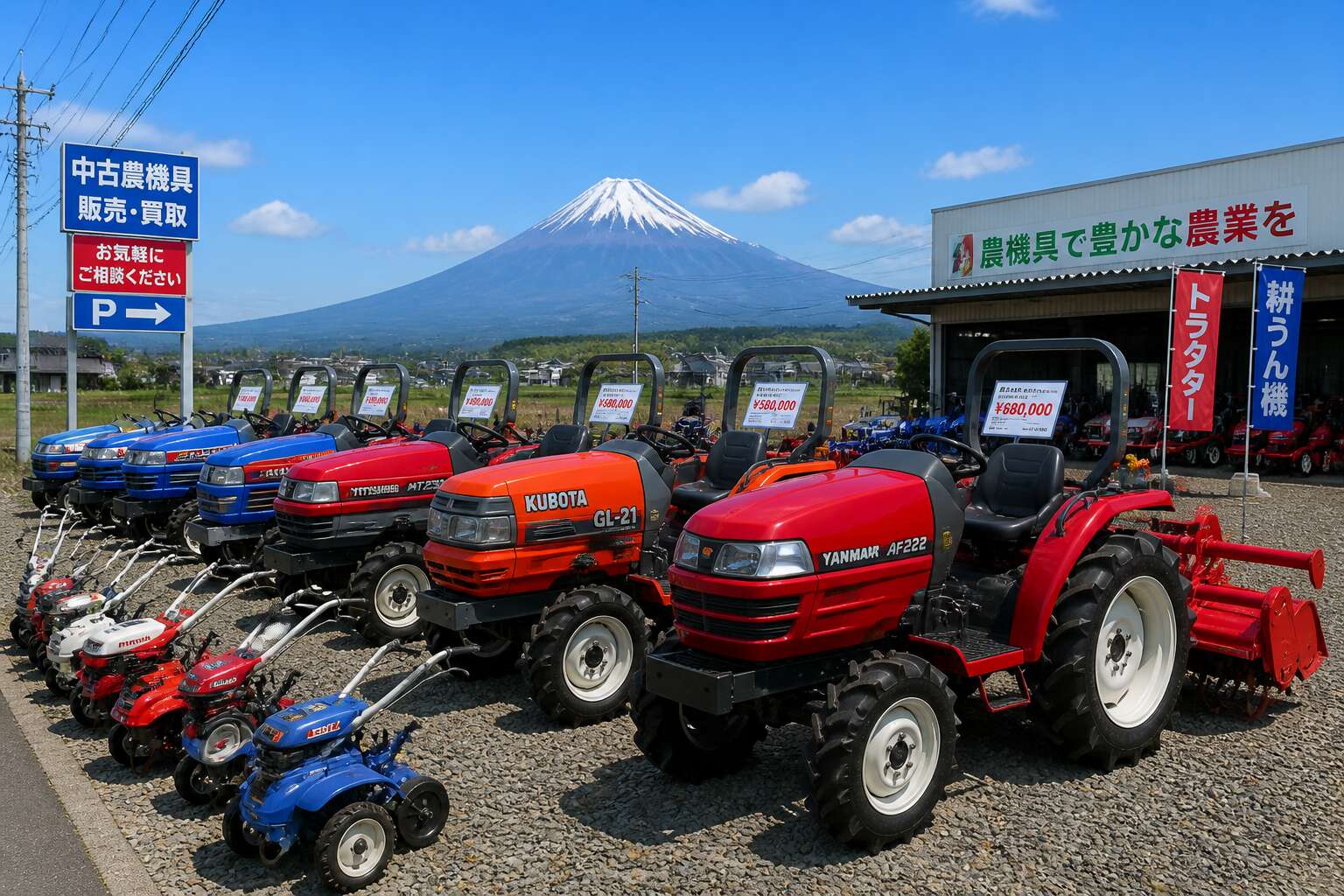
Why Japanese Machinery Dominates the Global Pre-Owned Market
The Reputation of Japanese Engineering
There is a simple reason why importers from Cape Town to Pretoria consistently turn to used farm equipment japan for their fleets. Japanese engineering has earned a reputation for relentless reliability, forged over decades of domestic pressure. The machines are built to operate in tight spaces and on demanding terrain, which translates into resilience that stands up to the vast open fields of South Africa. The precision of their hydraulic systems and the efficiency of their diesel engines remain unmatched in the secondhand sector. This is not a marketing claim, it is a measurable outcome of strict factory tolerances.
Farmers often find that a Japanese tractor with five thousand hours on the clock still performs better than a newer model from other origins. The secret lies in the maintenance culture of the original owners. Japanese operators follow service intervals with a discipline that borders on ritual. This obsession with upkeep means the equipment arrives with less hidden fatigue.
The engineering approach also supports parts availability:
– Standardized components across model ranges
– Detailed documentation that simplifies local repairs
– Modular designs that allow for quick swaps
The result is a lower total cost of ownership. When you buy used farm equipment japan, you are paying for a design philosophy that prioritizes function over flair. Resale value holds firm because the machinery outworks the competition. That level of dependability is why the used market in Japan remains the global benchmark for pre-owned farming assets.
Government Subsidies and Rapid Turnover
Japan’s agricultural subsidy calendar shapes the global tractor trade. Farmers receive government grants when they buy new machinery, but only within narrow enrollment windows. Miss the deadline and the support vanishes. This forces a predictable churn!
I have watched trade-in units arrive at Durban harbor with their original service logs still intact. The result is a market where used farm equipment japan leaves the first owner after approximately 1,200 hours of service, often within three years of purchase. Dealers take trade-ins and direct the units toward export auctions. Importers in Pretoria and Cape Town receive tractors with decades of utility remaining.
The policy mechanics work like this:
– Subsidies expire on fixed dates, accelerating purchases
– Trade-in programs require dealers to resell the old units abroad
– Auction houses in Osaka and Nagoya process the volume weekly
This steady pipeline explains the dominance of used farm equipment japan in South Africa. The turnover is structural, not incidental.
Low-Hour, Well-Maintained Exports
The tractors that leave Osaka and Nagoya carry something more valuable than their steel: a complete history. When I inspect import lots in Durban, the paperwork is the first thing I check. Each unit arrives with service logs, ownership records, and inspection sheets. This documentation lets importers in Pretoria and Cape Town calculate remaining utility with unusual confidence.
The auction houses enforce strict grading standards. Unmodified, low-hour machines receive premium classifications. Dealers who skip maintenance see their inventory drop to lower tiers. The result is that used farm equipment japan often arrives with provenance rarely matched by machinery from other origins.
Consider what travels in the container!
- Original service logs stamped by certified technicians
- Emission and fuel consumption records
- Auction grade certificates from Osaka or Nagoya
These documents transform the transaction. For buyers of used farm equipment japan in South Africa, the paper equals the steel in importance.
Key Machine Categories Buyers Search For
Compact Tractors and Mini Dumpers
Most South African smallholdings do not need a 200 horsepower behemoth. They need something that turns around a single windmill and slips through a narrow gate. That is why compact tractors, and the mini dumpers that often share their shipping container, are the most searched categories in used farm equipment japan.
Compact tractors from Japanese makers usually fall in the 15 to 40 horsepower range. They handle row crops, light tillage, and loader work without packing the ground down. The hydrostatic transmissions respond quickly. A driver can shift direction without clutching twice, which matters on a wet slope near a dam.
Mini dumpers haul fill, gravel, and manure across soft ground where a bakkie would bog down. Their tipping beds lift a full ton and a half without strain. Buyers sorting through used farm equipment japan listings usually check three things:
- Undercarriage wear, since mud and stones hide rust
- Diesel pump condition
- Wheel motor seals
Both machines serve the same master. They save a farmer’s back.
Rice Transplanters and Harvesters
Rice transplanters and harvesters look like they escaped from a sci-fi film set, yet they are among the most sensible purchases in used farm equipment japan. A transplanter can set seedlings in perfect rows while you sit back and wonder why your neighbour still bends over for six hours a day.
Harvesters from Japanese makers are equally precise. They cut, thresh, and bag in one pass, leaving barely a grain behind. For a South African farmer with a few hectares of rice or even wetland pasture, these machines pay for themselves quickly.
When sorting through used farm equipment japan listings, focus on a few key details:
- Track tension and sprocket wear, because rice paddies eat rubber tracks
- Conveyor belt condition inside the threshing unit
- Sensor calibration, since Japanese machines are fussy about accuracy
Tillers, Cultivators, and Attachments
Tillers and cultivators are the essential machines of Japanese farming. They are compact, precise, and built for small plots. A used tiller from Japan can outperform a new local unit in tough soil. Here is what buyers search for:
- Rotary tillers with adjustable depth
- Ridge makers for row crops
- PTO driven cultivators for tractors
These machines are easy to maintain. Parts are standard. Many imported units come with original toolkits. Used farm equipment japan offers a steady supply of these implements. Farmers in South Africa use them for vegetables, maize, and smallholder operations.
The real value is in the frame strength. Japanese steel handles rocky ground better than expected. Gearbox oil and blade condition determine the machine’s lifespan. A worn blade is fixable, but a cracked housing is not!
Excavators and Specialized Equipment
Japanese excavators arrive in South Africa with a peculiar reputation. They are small, nimble, and surprisingly dignified. A mini excavator from a Japanese farm often shows more hours than a local equivalent, yet it runs smoother. This is the result of a maintenance culture that approaches obsession.
Buyers hunting for used farm equipment japan typically search for three categories:
- Compact excavators under 5 tons for orchard work
- Long-reach units for irrigation canal cleaning
- Specialized attachments like hydraulic thumbs and tilt buckets
These machines excel at drainage, terracing, and digging around sensitive root systems. Japanese steel holds up in clay soils. The hydraulic systems are precise without being fussy. For a South African farmer, the real treasure is the low-hour undercarriage. Track wear is minimal because Japanese owners avoid hard surfaces. Purchasing used farm equipment japan is not a gamble. It is a calculated move backed by detailed inspection sheets and service records.
Spare Parts and Accessories
For the South African owner, the true worth of a machine comes from its behaviour after the first season. With used farm equipment japan, the spare parts market carries serious weight. Hydraulic seals, sensor lines, and small safety springs can fail quickly, yet the meticulous documentation means every part number traces back to the original factory spec. This clarity saves hours of guesswork. I have watched a farmer in Mpumalanga order a specific intake manometer code and fit it within an afternoon.
Buyers across the country routinely search for three categories of components:
- Precision solenoid valves for hydraulic couplers
- Electromotive relay switches that handle orange load
- The tapered bore pins that join the front implement frame
These parts fit because a Japanese exporter shared internals across a decade of production. The distribution network for used farm equipment japan is fast and direct, allowing a Western Cape farmer to procure a gasket for a 1995 model without waiting months. That accessibility turns an imported unit into a dependable, long-lived asset for the South African field.
Navigating Auctions and Dealer Networks
Online Auction Platforms and Bidding Systems
Online auctions for used farm equipment japan demand precise timing. The bidding systems on platforms like IronPlanet and Ritchie Bros. run on countdown clocks, and a delayed response often means losing a desirable machine. Dealer networks, by contrast, provide a measured approach. They offer inspected units, direct negotiations, and sometimes better financing terms. I have found that alternating between both methods works best for sourcing used farm equipment japan. One week I chase an auction for a rice transplanter; the next I email a dealer in Hokkaido.
Here is what I monitor when navigating these channels:
- Confirm the serial number against Japanese export records.
- Compare freight charges from Yokohama to Durban.
- Review the buyer’s premium for each auction platform.
Every system carries its own rules. Learning those rules reduces guesswork and improves bid outcomes.
Dealer Inspection and Grading Standards
A dealer’s grading sheet reveals what auction photos hide. For used farm equipment japan, inspection standards vary by prefecture, but serious exporters follow a consistent protocol. They test hydraulic pressure, check bucket teeth, and measure track sag. I always request the full inspection report before negotiating. A typical report includes:
- Engine compression readings
- Transmission fluid analysis
- Welding repair history
- Actual hour meter verification
Dealers grade equipment A, B, or C based on these findings. An A grade means minimal wear, no structural damage, and original paint. B allows cosmetic imperfections but still confirms functional reliability. C warns of substantial repairs. That grading system gives South African buyers a trusted baseline. I once received a B grade excavator that ran perfectly for years. Trust the report, but verify the unit yourself when possible.
Understanding Condition Reports and Photos
South African buyers entering the used farm equipment japan market face a wall of auction numbers and low resolution photos. Condition reports tell a more honest story than any image.
During my first auction, I focused on the wrong things. The glossy photo of a compact tractor looked fine, but the report noted a cracked valve cover. That difference matters.
Dealer networks in Japan run on trust. A reputable exporter will supply raw photos, not only selected angles. Look for paint chips, rust lines, and uneven wear on the undercarriage.
When evaluating a machine, I stick to a simple pattern:
- Verify the hour meter against the wear on pedals and levers.
- Check the date stamps on the hydraulic filters.
- Request photos taken from underneath, not just above.
That method narrows the distance between the auction screen and the loading dock in Durban or Cape Town.
Negotiating Prices and Payment Terms
The auction floor is a theatre, but the dealing room is where the real performance begins. In the market for used farm equipment Japan, the price on the landing page is a starting point, not a verdict. I have learned that the initial quote often carries a buffer for unexpected export preparation. Your negotiation leverage lives in the details you verified earlier. The presence of a cracked hose or a worn track link is a fact, not an insult. Use it to adjust the terms.
A reputable dealer wants a repeat customer, not a one-off transaction. They will often negotiate on freight consolidation or inland transport costs rather than the machine price itself. Payment terms typically require a 30% deposit to secure the unit, with the balance due before the vessel sails. Avoid telegraphic transfers to unknown intermediaries. Deal directly with the export desk.
When you move to finalise the deal, a specific sequence works well.
1. Confirm the total cost includes the export certificate and customs clearance.
2. Agree on the inspection window, and the process if you find a defect during loading.
3. Secure a written commitment on the loading port and the vessel schedule.
Separating the machine cost from the logistics cost clarifies the negotiation. You are haggling over the tractor, not the shipping container. That clarity makes the final price for used farm equipment Japan a fair sum, not a guess. The handshake happens over email, but the trust is built on the clarity of the invoice.
Export Documentation and Compliance
The Japanese auction calendar follows a rhythm. Local dealers who buy weekly from the same halls recognise which lots carry full provenance paperwork and which arrive with only a key. For a South African importer, skipping documentation to save yen will cost more at the port than it ever saves at the hammer.
- Export certificate proving the machine meets Japanese export standards.
- Bill of lading that matches the condition report and serial number.
- Compliance with the Machinery Safety Ordinance for older units.
Dealer networks in Japan run on referral. I look for a registered exporter who belongs to a prefectural agricultural machinery association, because they handle both the auction bid and the compliance chain. Without a clean chain of title, your used farm equipment japan purchase will stall at any South African port. If a dealer offers to ship used farm equipment japan without an inspection certificate, walk away. Phytosanitary declarations are often forgotten, and that oversight slows whole containers.
Using a Buying Agent or Broker
An auction hall in Hokkaido looks calm, but the bidding moves fast. A buying agent or broker gives you a real advantage. They understand which dealer networks actually stand behind their claims and which ones sell equipment with hidden problems. Good brokers have sat in those halls for years. They know when a nod means a bid and when a scratch means a rebuilt engine. Here is what they do:
- Filter out junk lots before you waste a cent.
- Leverage personal relationships to get pre-auction info.
- Bid on your behalf without emotional overreach.
When you chase used farm equipment japan through an agent, you avoid the expensive mistakes that come from guessing. Their commission buys you a shorter learning curve, and that is a bargain.
Logistics and Shipping from Japan
Container Loading and Packaging Methods
At any major Japanese port, a worker’s checklist decides how well your machinery survives the voyage. Used farm equipment japan that leaves Kobe or Nagoya is treated with the same care as new machines. Moisture and vibration cause most damage, so every unit has fluids drained, hoses labelled, and buckets lowered.
- Crating tillers and transplanters in plywood
- Shrinking wrapping cabs to block dust
- Placing desiccant bags inside enclosures
- Bolting tracks to steel cradles
The loading itself requires precision. A 20-foot container might hold two compact tractors, but the loader positions them rear-first to protect glass and controls. Weight distribution is measured twice. A single miscalculation can shift the centre of gravity and cause the container to tip during crane operations. That is why dealers photograph every placement. This attention to detail explains why used farm equipment japan arrives in South Africa with fewer surprises.
Port Choices and Freight Options
The port you choose can shift freight costs by thousands of rand. Tokyo, Yokohama, Kobe, and Nagoya each offer different freight schedules and demurrage terms. For most buyers of used farm equipment japan, Kobe and Nagoya remain the busiest for agricultural machinery, as they connect to frequent ro-ro and container services heading to Durban and Cape Town.
Freight options vary more than many buyers expect. Full container loads give exclusive control over the container, while less-than-container loads reduce upfront costs when only one machine is needed. That tradeoff between waiting for consolidation and paying for speed often decides the final invoice.
- Direct sailings from Kobe to Durban cut transit time by about a week.
- Transshipment via Singapore or Port Louis regularly lowers freight rates.
Forwarders quote differently for these routes. The spread between a direct sailing and a transshipment can exceed several thousand rand, so the port choice deserves attention.
Customs Clearance for Agricultural Imports
A single discrepancy between the bill of lading and the customs declaration can hold a shipment for weeks. That delay costs money, and it erodes the price advantage that drew you to used farm equipment japan in the first place.
Clearing agricultural imports through South African customs demands attention to specific details. The machine must have a valid import permit, and the engine serial number must match the documents exactly. If the unit carries traces of soil or plant material, biosecurity inspectors may send it for fumigation, which adds days to the timeline.
Working with a clearing agent who specialises in agricultural machinery reduces these risks. They know which declarations the agricultural authority requires.
One missing signature on the final declaration form means the difference between a smooth handover and a storage bill that grows daily.
Estimated Lead Times and Costs
Thirty to 45 days on the ocean separates your next tractor from the auction floor in Osaka. That is the reality of buying used farm equipment japan. The lead time rarely shrinks unless a vessel skips a port, and Durban congestion can stretch it further.
Costs separate into predictable layers. A 40 foot container runs between R45,000 and R70,000 during peak season. Port handling, broker fees, and inland transport add another R15,000 to R25,000.
Practical figures for a typical compact tractor shipment:
- Container loading and lashing in Japan: R8,000 to R12,000
- Phytosanitary and decontamination certificates: R3,500 to R6,000
- Customs clearance and port charges: R6,000 to R9,000
The price advantage of used farm equipment japan holds only when you price the full chain. A machine bought for R120,000 can land in Johannesburg at R210,000.
Insurance and Risk Management
A container can shift in heavy seas, or the vessel can sit for weeks outside a congested port. Marine cargo insurance covers this uncertainty. It is a modest premium against the full replacement cost. Read the policy terms carefully! Some policies exclude water damage from condensation, which is common on tropical routes.
- The insurer’s reputation for settling claims in South Africa
- Whether the policy covers inland transport from the port to the farm
- The exact point where risk transfers from the seller to the buyer
Insurance premiums for used farm equipment japan typically range from 1% to 2% of the declared value. For a compact tractor worth R120,000, that is R1,200 to R2,400. This amount is small compared with the total investment.
After-Sale Support: Parts, Service, and Longevity
Sourcing Genuine and Aftermarket Parts
A 2019 survey revealed that 68% of used machinery buyers weigh parts availability above purchase price. That statistic holds true for used farm equipment japan, where the after-sale ecosystem determines whether a machine thrives for a decade or becomes a yard ornament. Genuine components from Japanese manufacturers remain accessible, though shipping costs to South Africa demand strategic planning.
Aftermarket parts offer an alternative, but quality varies sharply. Service manuals and digital diagnostics from original suppliers help local mechanics maintain precision. For owners, building a relationship with a specialist importer proves invaluable.
- Hydraulic hoses and seals
- Filters for fuel, oil, and air
- Track undercarriage components
- Cultivator tines and blades
These items see the heaviest wear. Sourcing them early, before a breakdown, shortens downtime and extends machine life.
Maintenance Schedules for Japanese Machines
Japanese machinery arrives in South Africa carrying documented service intervals, but those schedules assume a temperate climate, not African dust. The machines perform reliably when the maintenance plan is respected. Owners who skip a filter change to save a day often lose a week during harvest.
A practical schedule for used farm equipment japan should include:
1. Engine oil and filter replacement every 250 hours.
2. Hydraulic oil analysis at 500 hour intervals.
3. Coolant flush annually.
4. Injector inspection every 1,000 hours.
The importer’s service records show whether a machine followed its schedule. A farmer who buys used farm equipment japan with verified maintenance history gains a predictable lifespan. Without those records, the schedule is a guess, and a guess costs money.
Compatibility with Local Fuels and Standards
After the invoice is settled, the real test of a machine begins. A Japanese tractor idling in Mpumalanga runs on the same diesel we use in our bakkies, but the tolerances differ. Low sulfur fuel can affect older injection pumps if the timing is not adjusted. Ensure the dealer provides a local tuning checklist when you take delivery of used farm equipment japan.
A good support network covers more than oil changes. The following services matter:
- Fuel pump calibration to match South African diesel quality.
- Alternator and battery checks for our warmer climate.
- Warranty that honours local labour rates.
Parts for Japanese machines are stocked in Johannesburg and Durban, so a snapped hydraulic hose costs you a day instead of a month. The longevity of any used farm equipment japan purchase depends on this support. No machine survives on its own.
Resale Value and Depreciation
The moment you hand over the cash, the real transaction begins. Buying used farm equipment japan means committing to what happens after delivery. A machine that sits broken for three weeks loses money every day. Parts for Japanese models are stocked in Johannesburg and Durban, but a dealer with a proper service log makes the difference between a short repair and a long wait. Farmers who track maintenance schedules see better resale values.
The depreciation curve on these machines stays gentle when you keep service records. A well-maintained unit holds its price because buyers trust the documented history. Key after-sale support points:
- Oil and filter kits delivered to your farm.
- Certified technicians who understand Japanese wiring.
- Trade-in options that reward documented care.
Without this support, a machine turns into scrap. With it, used farm equipment japan remains a productive tool for years.
Online Communities and Technical Resources
Somewhere in Mpumalanga, a farmer troubleshoots a hydraulic fault on a Kubota at midnight. He posts a short video to a WhatsApp group dedicated to used farm equipment japan. Within minutes, three replies arrive. One from a mechanic in KZN, another from a farmer in Limpopo who solved the same issue last season, and a third carrying a link to a translated Japanese service manual.
These online communities hold knowledge that dealers often overlook. Wiring diagrams, sensor voltage ranges, common failure points for specific model years. They operate as a living archive. Getting real value from them requires a stable connection, a willingness to share your own hard-won lessons, and patience with imperfect translations.
Buying used farm equipment japan means joining this network. The machine arrives with its mechanical history intact. The community supplies the practical wisdom needed to keep it productive for years.
Warranty Options on Pre-Owned Units
Only 12% of pre-owned Japanese imports in South Africa carry any formal warranty, yet most buyers expect some form of protection. That gap defines the after-sale landscape for used farm equipment japan. Dealers who offer structured coverage, usually 30 to 90 days on driveline components, are the exception. Independent mechanics fill the rest of the picture, often more reliably than franchise workshops. A typical support package includes:
– Pre-delivery inspection reports with compression test results
– Hydraulic pressure checks before handover
– Access to translated service bulletins for the specific model series
Longevity on these machines depends less on the original build and more on the first 500 hours under local conditions. Warranty options on pre-owned units rarely cover wear items, so know exactly what falls outside the agreement. Genuine parts remain available through established import channels, but lead times vary. That reality shapes every maintenance decision.

0 Comments